Concrete-mesa | Concrete Admixtures, Tools, and Production Machines

Choosing the Right Redispersible Polymer Powder for Repair Mortars: A Clear-Cut Comparison
The Core Polymer Decision for Your Repair Mortar
Selecting the right redispersible polymer powder for repair mortars boils down to a simple trade-off: cost versus performance under specific conditions. There is no universal ‘best’ polymer powder. The optimal choice depends on your project’s exposure, substrate, and budget. Let’s cut through the noise and compare the three main players head-on.
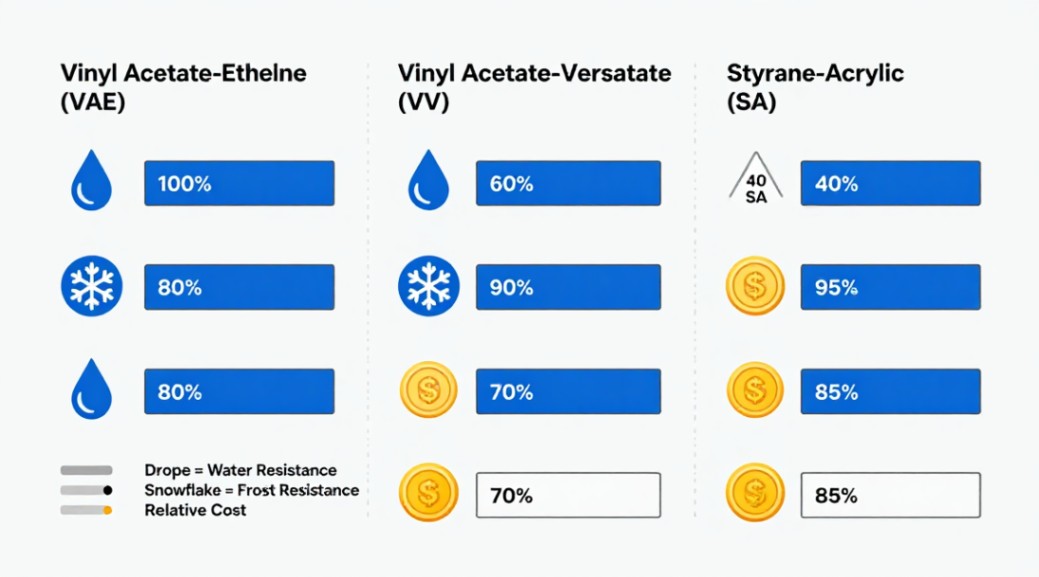
Polymer Powder Showdown: VAE vs. VeoVa vs. Acrylic
We’ve all faced the data sheet overload. This table distills twenty years of field and lab experience into a direct, objective comparison of the key polymer types. It’s your starting point for making an informed decision.
| Property | VAE (Vinyl Acetate-Ethylene) | VeoVa-VAE (Vinyl Versatate) | Acrylic |
|---|---|---|---|
| Primary Benefit | Excellent cost-to-performance ratio | Superior water & alkali resistance | Top-tier flexibility & UV stability |
| Adhesion Strength | Very Good | Excellent | Excellent to Outstanding |
| Flexural Strength & Crack Bridging | Good | Very Good | Best in Class |
| Water Resistance | Moderate | Excellent | Very Good to Excellent |
| Alkali Resistance | Fair | Outstanding | Excellent |
| UV & Weather Stability | Good (can yellow slightly) | Very Good | Outstanding (no yellowing) |
| Workability (Open Time, Smoothness) | Very Good | Good | Excellent |
| Typical Dosage Range (by weight of cement) | 1.5% – 4.0% | 2.0% – 5.0% | 3.0% – 7.0% |
| Relative Cost | Lowest | Medium | Highest |
| Best For These Conditions | Most interior repairs, non-critical external patches, thin-bed renders. | Wet areas, swimming pools, foundations, high-alkaline substrates. | Exterior insulation systems (ETICS), flexible tile adhesives, crack-bridging renders, façades. |
How to Use This Comparison in Practice
The table gives you the ‘what.’ The logic behind it tells you the ‘why.’ Your selection process should follow this sequence.
Step 1: Define the Enemy (Environmental Stress)
Identify the primary stressor on your repair. Is it constant moisture? Freeze-thaw cycles? Substrate movement? UV exposure? This is your deciding factor.
- Enemy: Water & Alkalis → Choose VeoVa-VAE. Its hydrophobic nature resists plasticizer leaching and hydrolysis.
- Enemy: Thermal Movement & Cracking → Choose Acrylic. Its polymer film remains flexible at lower temperatures.
- Enemy: Limited Budget, Moderate Conditions → Choose VAE. It delivers the core benefits of redispersible polymer powder at the best price.
Step 2: Get the Mixing & Dosage Right
A perfect polymer powder fails with poor execution. Precision matters. Here is a bulletproof mixing protocol we follow for consistent results.
- Dry Mix First. Blend all dry components (cement, sand, filler, polymer powder) for a minimum of 60 seconds in a forced-action mixer.
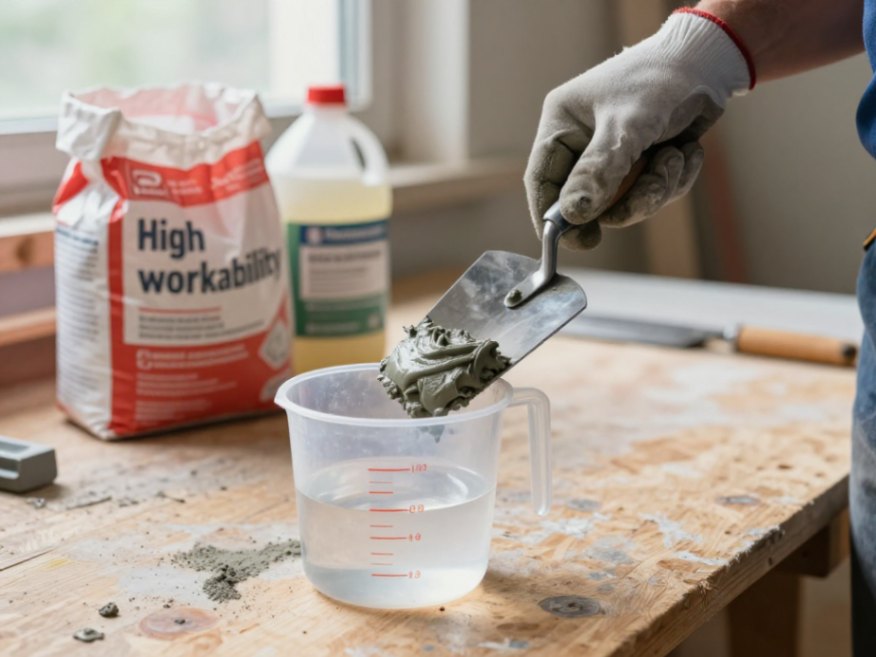
- Add Water Precisely. Use the exact amount of clean, cold water (typically 18-22 liters per 25kg bag). Add it all at once.
- Mix Thoroughly. Mix for 3-5 minutes until a homogeneous, lump-free consistency is achieved. Let the mortar rest (slake) for 2-3 minutes, then remix for 1 minute. This activates the polymers properly.
Never add extra water to improve workability. It dilutes the polymer concentration, destroying adhesion and durability. If you need better workability, select a powder designed for it or use a liquid superplasticizer compatible with your polymer.
The Tangible Impact on Your Repair Project
Choosing correctly isn’t theoretical. It directly determines your repair’s lifespan. A polymer-modified mortar doesn’t just stick better; it becomes a different, more robust material system.
Beyond Basic Cement: A Performance Leap
Compared to traditional cement-only mortars, the right polymer powder transforms performance. Cement mortar is brittle and rigid. Polymer-modified mortar is tough and flexible.
- Adhesion: Polymers form a chemical and mechanical bond with the substrate. Failure moves from the bond line into the substrate or mortar itself.
- Crack Resistance: The polymer film bridges micro-cracks. It redistresses stress, preventing crack propagation that would shatter plain cement.
- Durability: The system becomes less permeable. Water, chlorides, and sulfates struggle to penetrate, dramatically reducing spalling and corrosion.
Seeing the Long-Term Payoff
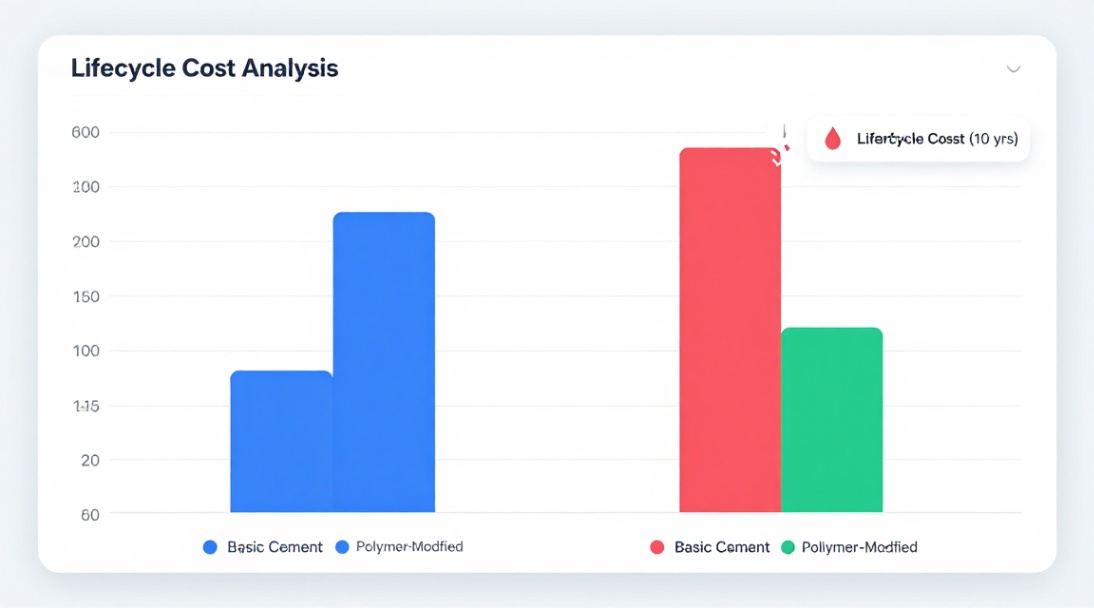
We’ve seen this play out for decades. A properly specified and applied polymer-modified repair simply lasts. The initial material cost is higher than basic cement. The total lifecycle cost is almost always lower. You avoid repeat repairs, water ingress damage, and structural compromise. That’s the real value of your polymer selection.
Your Logical Next Step
Use the comparison table to narrow your options based on project conditions. Then, test. Batch a small amount with your chosen polymer powder and your specific sand. Cheque adhesion (pull-off test), workability, and cured flexibility. This practical verification, guided by the logic above, is how we ensure a repair stands the test of time. It moves you from hoping it works to knowing it will.
Supplier
We are the global leader in lightweight concrete and advanced engineered foam solutions. Known globally for its commitment to research, innovation, and applied expertise, we have been providing engineered foam solutions since the early 2012’s.
We can supply high-quality concrete admixture and foam concrete related products all over the world.
The company has a professional technical department and quality supervision department, a well-equipped laboratory, and equipped with advanced testing equipment and after-sales customer service center.
If you are interested, please feel free and contact us.