Concrete-mesa | Concrete Admixtures, Tools, and Production Machines

Sodium Silicate vs. Other Densifiers: An Objective Guide for Concrete Professionals
An Engineer’s Pragmatic Choice
I recall a project fifteen years ago. A client called about their 30-year-old warehouse floor. It was a dust nightmare. Abrasion from forklift traffic had turned the surface into a fine, gritty powder. Their priority wasn’t structural repair. They needed immediate, cost-effective dust control and surface hardening. We specified a sodium silicate solution for concrete densification. The results were rapid and effective. That floor remains in service today with minimal dust. That experience cemented my respect for this specific, pragmatic chemical treatment.
Frequently Asked Questions on Concrete Densification
What exactly is a sodium silicate solution for concrete?
Sodium silicate, often called water glass, is an alkaline liquid compound. When applied to concrete, it reacts with free calcium hydroxide (portlandite) and calcium ions present in the pore water. This reaction forms a calcium-silicate-hydrate (C-S-H) gel, the same binder that gives concrete its inherent strength. This new C-S-H gel fills the microscopic pores and capillaries near the surface, effectively densifying the concrete matrix.
How does sodium silicate actually densify concrete?
The mechanism is a straightforward chemical reaction. Sodium silicate (Na2SiO3) penetrates the surface. It reacts with soluble calcium compounds (Ca(OH)2). This precipitates an insoluble C-S-H gel. This gel clogs pores from within. The result is a harder, less permeable surface layer. It does not form a topical film or coating.
What are the proven benefits of using sodium silicate?
- Effective Dustproofing: It binds loose surface particulates, eliminating the primary cause of dusting on old or poorly finished slabs.
- Surface Hardening: Increases surface hardness and abrasion resistance, extending service life in light to moderate traffic areas.
- Cost-Effectiveness: It is typically the most economical chemical densifier available.
- Ease of Application: Can be applied by sprayer, roller, or squeegee with standard cleaning equipment.
- Compatibility: Reacts with most standard Portland cement-based concrete.
What are its key limitations?
- Surface Treatment Only: Penetration is limited, usually to 1-3 mm. It does not repair cracks, spalls, or structural deficiencies.
- Limited Strength Gain: Provides a modest increase in surface compressive strength (typically 10-15%), not a structural upgrade.
- Not a Waterproofing Agent: It reduces water absorption but does not create a positive hydrostatic barrier.
- Potential for Hazing: If over-applied or improperly removed, unreacted silicate can form a white, chalky residue.
- Alkaline Nature: Requires proper safety gear (gloves, goggles) during handling.
How does sodium silicate compare to lithium or potassium silicates?
This is a critical comparison. Many users on industry forums like Reddit’s r/Concrete or ContractorTalk report confusion. The choice hinges on performance, cost, and substrate. Sodium silicate reacts with free lime. Lithium silicate is more efficient, reacting with both free lime and silica within the concrete. This often yields a harder, deeper-penetrating, and more stable result without the efflorescence risk sometimes associated with sodium-based products. Potassium silicate offers a middle ground, with performance and penetration typically better than sodium but below lithium. However, lithium silicates command a significantly higher price.
What is the precise application process?
Success depends on meticulous preparation and execution. Cut corners here, and you compromise the entire treatment. Follow these steps precisely.
| Step | Procedure | Critical Details |
|---|---|---|
| 1. Preparation | Mechanically clean the surface. | Use a diamond grinder or shot blaster to open pores. Remove all contaminants, curing compounds, and laitance. Achieve a CSP 3-4 profile. Vacuum thoroughly. |
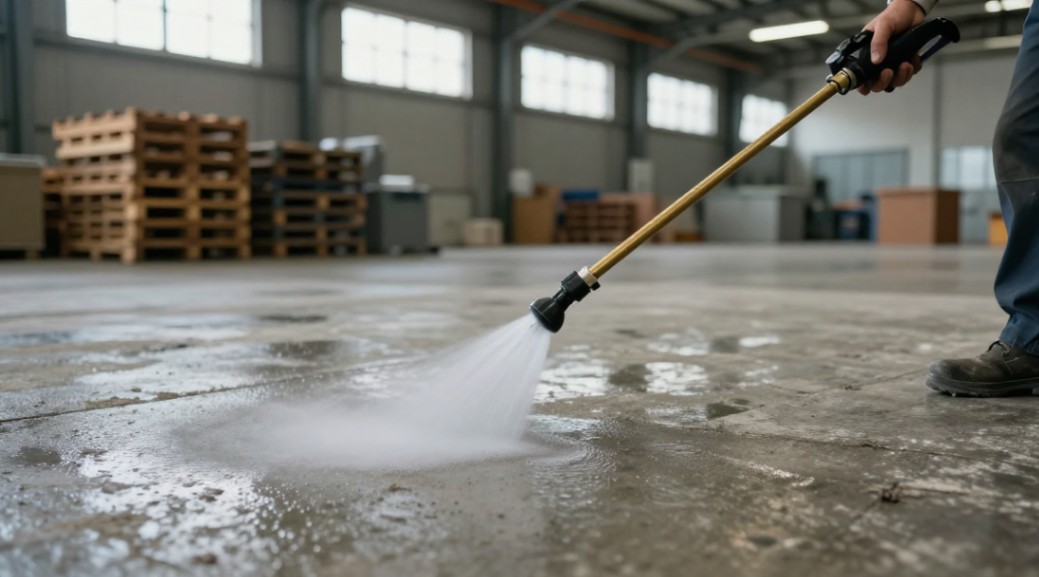
| 2. Application | Apply solution evenly. | Use a low-pressure sprayer (fan spray tip) or a microfiber roller. Apply at a rate of 75-150 square feet per gallon for the first coat. Maintain a wet edge. |
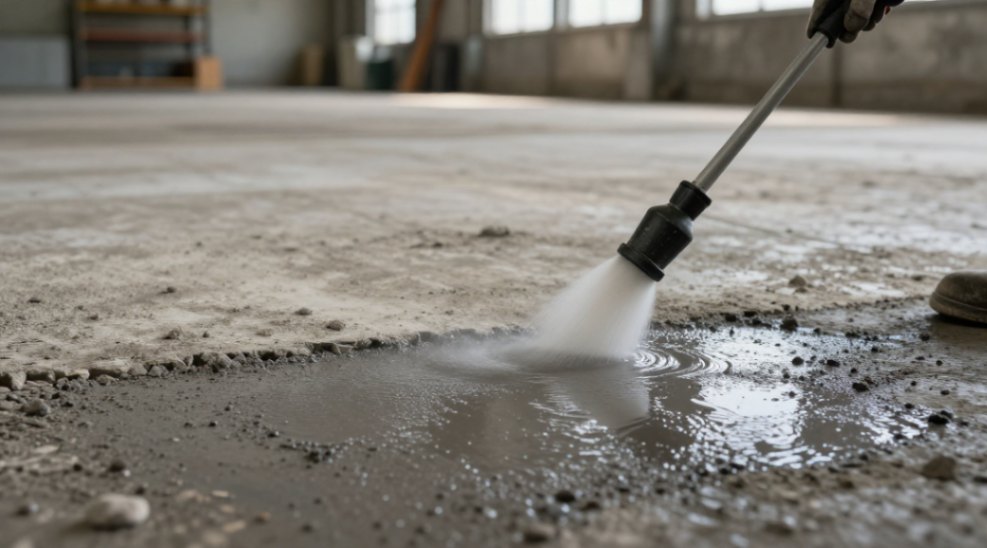
| 3. Reaction & Removal | Allow dwell time, then remove residue. | Let the solution penetrate for 20-45 minutes. Surface should stay wet, not pool. Scrub or mop off any sticky residue with clean water before it dries. |
| 4. Second Coat | Apply a follow-up coat. | After 1-2 hours, apply a second coat at a higher rate (150-300 sq ft/gal). This ensures saturation. |
| 5. Curing | Allow full chemical cure. | Keep the area clear for 24-72 hours. The chemical reaction continues for up to 30 days for full maturity. |
Where is sodium silicate the ideal choice?
Select sodium silicate solution for concrete densification for specific, non-critical applications. Its best use cases are existing, sound concrete slabs where the primary goals are dust control and moderate surface hardening. Think warehouses with light pallet jack traffic, aging garage floors, industrial workshops, and retail backrooms. It is a excellent maintenance treatment for floors that are structurally sound but simply aged and dusty.
What should I absolutely not expect it to do?
Manage expectations. This product will not fill cracks. It will not waterproof a basement wall against hydrostatic pressure. It will not restore load-bearing capacity to compromised concrete. Applying it over a damaged slab is a waste of material. It is a densifier and hardener, not a patching compound or a membrane.
What results can I realistically expect?
After proper application and cure, you will achieve a denser, harder surface. Abrasion resistance improves. Dusting ceases. The surface will have a slightly darker, more uniform appearance. Water droplets will bead initially, indicating reduced porosity. The key word is ‘surface’. The core properties of the concrete remain unchanged.
The Final Verdict: When to Choose Sodium Silicate
Based on two decades of field observation, here is my objective recommendation. For existing, non-critical industrial floors with a dust problem and a tight budget, sodium silicate is a proven, effective solution. It delivers good value. For new construction, high-traffic areas, or projects where maximum performance and efflorescence control are paramount, invest in a premium lithium silicate densifier. The higher initial cost provides superior long-term durability and chemical stability.
Your next step is clear. For your specific project, prioritize your requirements: budget, traffic levels, and slab condition. If sodium silicate aligns with your needs as outlined above, source a high-purity product from a reputable supplier. Test it on an inconspicuous area first. Follow the application table meticulously. This disciplined approach will yield a durable, dust-free floor that performs for years.
Supplier
We are the global leader in lightweight concrete and advanced engineered foam solutions. Known globally for its commitment to research, innovation, and applied expertise, we have been providing engineered foam solutions since the early 2012’s.
We can supply high-quality concrete admixture and foam concrete related products all over the world.
The company has a professional technical department and quality supervision department, a well-equipped laboratory, and equipped with advanced testing equipment and after-sales customer service center.
If you are interested, please feel free and contact us.