Concrete4U | Concrete Admixtures, Tools, and Production Machines

Waterproof Cement: Don’t Start Your Project Until You Read This Warning
A Story of Silent Failure
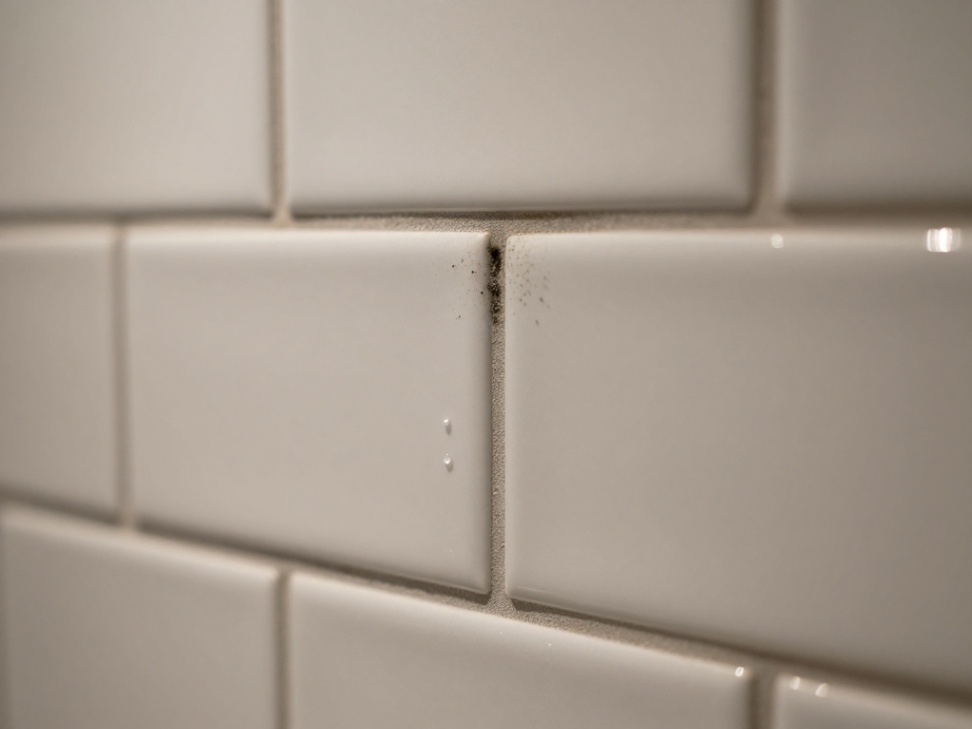
I once inspected a high-end basement spa, six months after completion. The owner loved it. The ambient lighting was perfect. Then I pressed my hand against the beautifully tiled wall. It felt cold. Damp. A hidden mold colony was already feasting behind the scenes. The builder used a standard mortar mix, believing a surface coating would suffice. He was catastrophically wrong. This is not a tale of poor workmanship, but of fundamental misunderstanding. Special cement for waterproofing applications is not magic dust you sprinkle on a problem. It is a system. Misuse it, and you build a tomb for water, not a barrier against it.
The Core Deception: Cement vs. Waterproofing Cement
Standard Portland cement is porous. Think of it as a hard sponge. It wants to absorb water and pull it through capillaries. Special waterproofing cement changes the matrix itself. Integrally, it uses hydrophobic compounds or crystalline growth agents. These agents clog the capillary tracts. Water physically cannot find a path. This is the first truth most ignore: you are not coating a surface; you are re-engineering the substrate’s very nature.
The Fatal Flaw: Surface Preparation Neglect
This is the number one killer of waterproofing projects. Applying a premium product to a dirty, unstable, or unprepared surface is pouring money down a drain. The substrate must be sound, clean, and properly profiled. Any loose material, dust, or form oil will create a delamination plane. Your perfect waterproofing layer will simply peel off, like a sticker on greasy metal. The bond is everything.
Critical Warning: The Mixing Trap
Never, ever guess the water ratio. This is not traditional concrete. Adding extra water to make it ‘easier to trowel’ destroys the chemical balance. You dilute the active agents. You increase shrinkage. You create a weak, permeable layer destined to crack. Follow the manufacturer’s instructions with laboratory precision. Mix for the full prescribed time. A sloppy mix guarantees a failed barrier.
| Common Mistake | Consequence | The Correct Action |
|---|---|---|
| Adding excess water | Reduced chemical concentration, shrinkage cracks, permeability. | Use a measuring jug. Stick to the specified water-to-powder ratio by volume. |
| Inadequate substrate preparation | Delamination, bond failure, hidden water pathways. | Mechanically profile (e.g., scrub, sandblast), remove all laitance, and saturate the surface (no standing water). |
| Ignoring crack-bridging limits | Cracks telegraph through, breaking the waterproof seal. | Identify structural vs. non-structural movement. For active cracks, use a designed flexible joint or a specific crystalline product that can self-seal. |
| Poor curing | Rapid drying prevents proper hydration and crystal growth, leading to a dusty, weak finish. | Keep the applied material damp (mist spray, wet burlap) for at least 72 hours as per the technical data sheet. |
Why This Beats Tar and Plastic
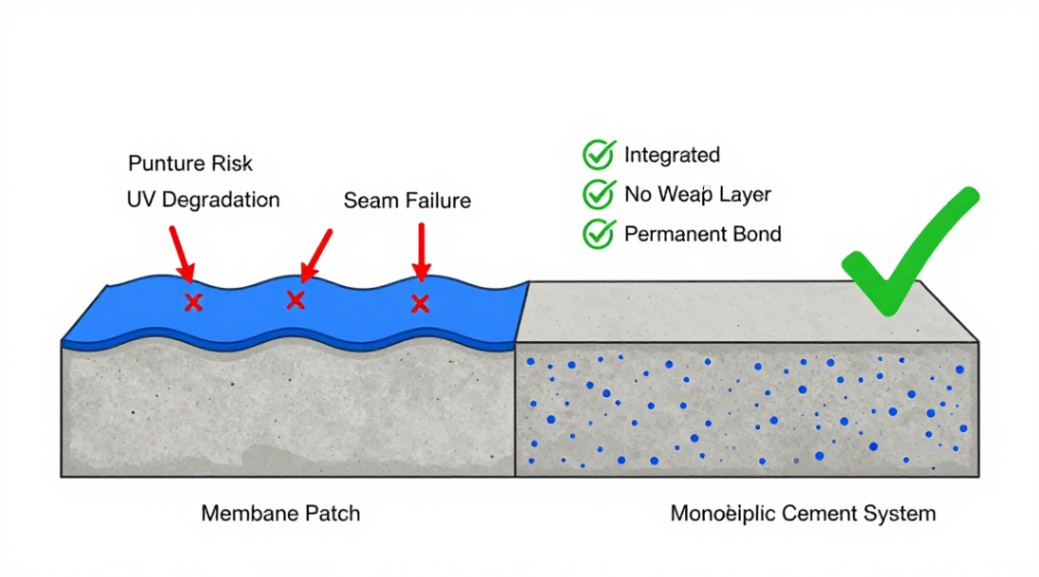
Membranes are a patch. They sit on top, vulnerable to punctures, UV degradation, and physical damage. A properly integrated special cement system becomes the structure. It is monolithic. There is nothing to puncture. Its durability matches the concrete itself. For foundations, swimming pools, and wet rooms, this means a permanent solution, not a maintenance liability waiting to happen.
Application: The Method is Non-Negotiable
You must apply continuous pressure. Whether using a trowel or a sprayer, you are consolidating the material into the pores of the substrate. For vertical surfaces, apply from the bottom up in overlapping strokes. For horizontals, ensure a consistent thickness. Any thin spot is a future leak. A 2mm thickness in one area and 4mm in another creates differential stress and a weak point.
The Logical Path Forward
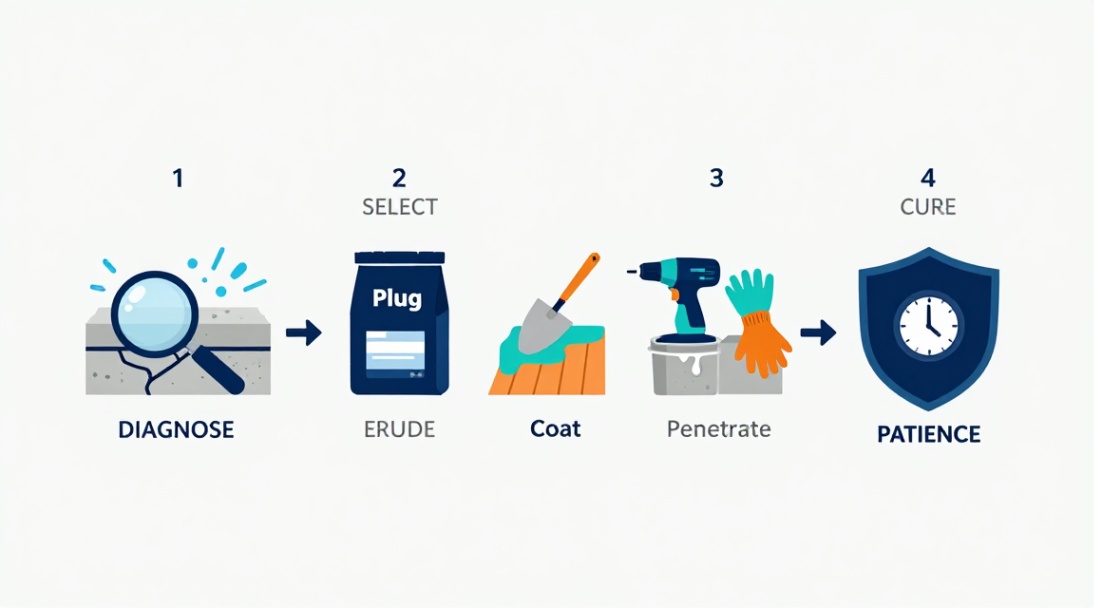
Stop looking for a simple product. Start planning a systematic process. Your project demands it. First, diagnose the substrate and water pressure. Second, select the appropriate type-a rapid-setting plugging mortar for active leaks, a flexible coating for decks, or a crystalline slurry for deep penetration. Third, execute preparation and mixing with discipline. Finally, cure with patience.
This is not a product you simply buy. It is a result you engineer. The difference determines whether your basement stays dry for decades or becomes a mold-ridden liability within a year. Your next step should be a consultation with a specialist who thinks in systems, not just bags of powder. The correct material, like a high-performance crystalline waterproofing cement, is only one component of that system. Choose the component, and the partner, wisely.
Supplier
We are the global leader in lightweight concrete and advanced engineered foam solutions. Known globally for its commitment to research, innovation, and applied expertise, we have been providing engineered foam solutions since the early 2012’s.
We can supply high-quality concrete admixture and foam concrete related products all over the world.
The company has a professional technical department and quality supervision department, a well-equipped laboratory, and equipped with advanced testing equipment and after-sales customer service center.
If you are interested, please feel free and contact us.