Concrete4U | Concrete Admixtures, Tools, and Production Machines

Redispersible Polymer Powder for Repair Mortars: The Definitive Expert Guide
What is Redispersible Polymer Powder for Repair Mortars?
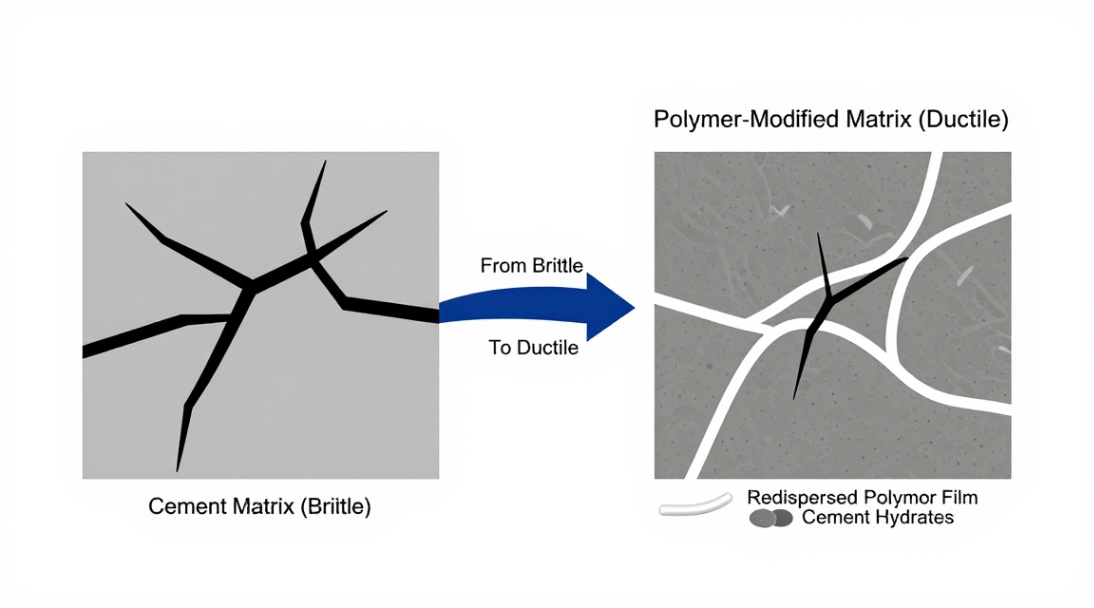
Redispersible polymer powder (RPP) is a polymer resin, spray-dried into a free-flowing powder. It acts as a performance-enhancing additive for cement-based repair mortars. When mixed with water, this powder “re-disperses,” forming a cohesive polymer film that interweaves with the cement matrix. This integration fundamentally transforms the mortar’s physical properties, shifting its behavior from brittle to ductile. RPP is not a surface coating; it is a bulk matrix modifier.
Your Repair Mortar Questions, Expertly Answered
What does redispersible polymer powder do in repair mortars?
It creates a co-matrix. The cement hydrates, forming a rigid, crystalline structure. Simultaneously, the re-dispersed polymer particles coalesce into a flexible, fibrous film. This dual-matrix system combines strength with elasticity. The polymer bridges micro-cracks, improves adhesion to old substrates, and dramatically reduces permeability.
Is polymer-modified mortar better than plain cement mortar for repairs?
Yes, for almost all repair scenarios. A plain cement repair is prone to cracking due to shrinkage and stress. It bonds poorly to many existing surfaces. Polymer-modified mortar, through the action of RPP, addresses these core failures. Its superior flexibility accommodates movement. Its enhanced adhesion ensures the repair stays in place. Industry case studies show polymer-modified systems achieve bond strengths 200-300% higher than unmodified mixes on difficult substrates like old concrete.
How does it improve adhesion and stop cracking?
Adhesion improves through mechanical interlock and chemical bonding. The polymer film penetrates substrate pores and anchors the mortar. For crack resistance, the polymer film acts as a distributed network of microscopic reinforcements. It absorbs and redistributes tensile and shear stresses that would otherwise cause a brittle cement matrix to crack. This is often measured as improved flexural strength and reduced shrinkage.
What about water resistance and durability?
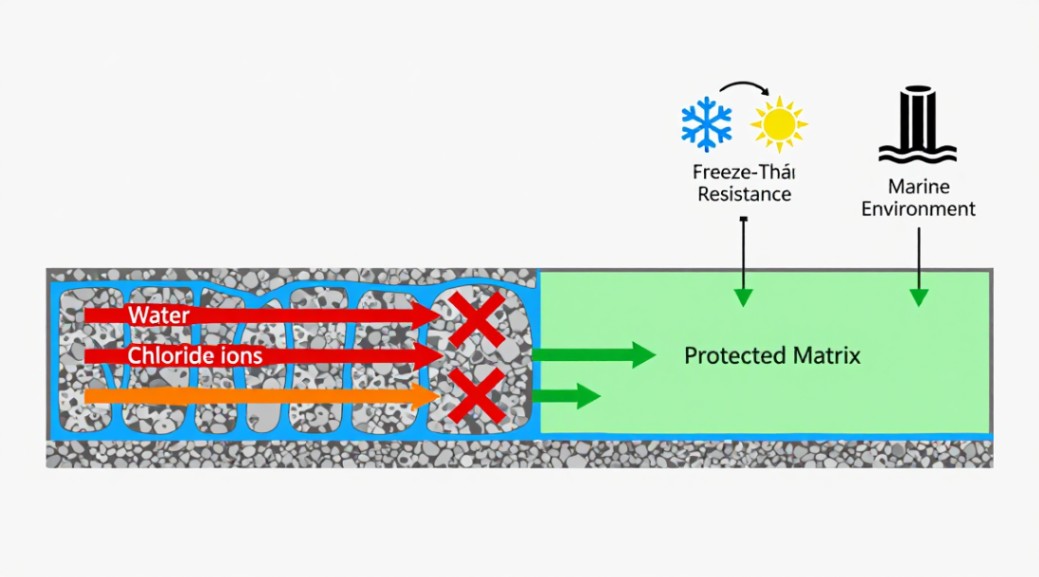
RPP significantly reduces water absorption. The polymer film blocks capillary pores within the mortar. This leads to exceptional durability against freeze-thaw cycles, as there is less water inside to expand and cause damage. It also protects against chloride ion ingress in parking structures or marine environments, a critical factor for long-term structural integrity.
VAE or Acrylic powder? Which polymer type should I choose?
Your project dictates the choice. Vinyl Acetate Ethylene (VAE) powders offer excellent all-around performance, good alkali resistance, and are cost-effective for general structural repairs. Acrylic-based powders provide superior water resistance, UV stability, and flexibility at lower temperatures, making them the choice for exterior facades, balconies, and thin-bed repairs. Always consult technical data sheets for specific performance grades.
What is the correct dosage and mixing procedure?
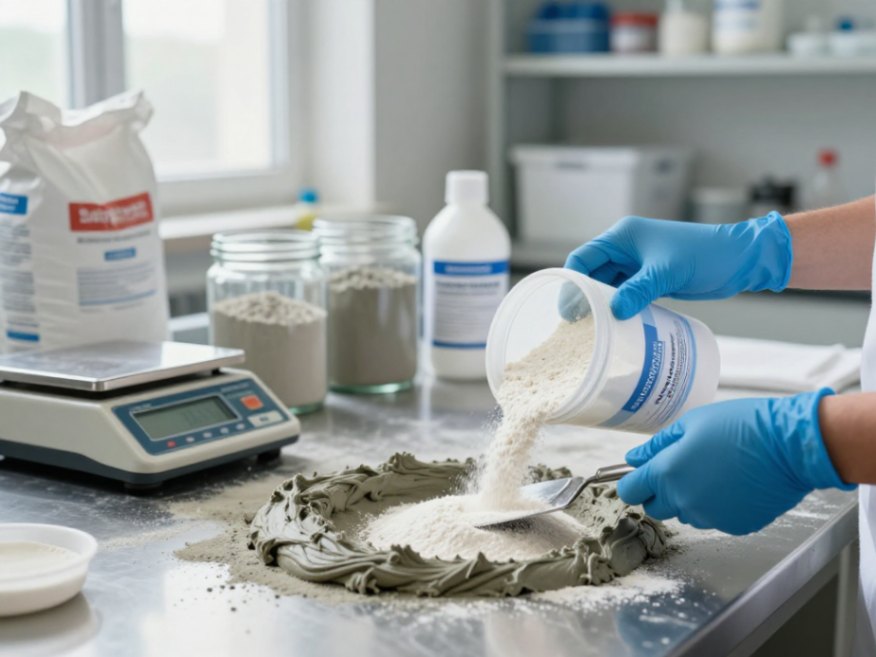
Dosage typically ranges from 1.5% to 5.0% by weight of cement. Follow the manufacturer’s specification precisely. Under-dosing yields minimal benefit; over-dosing can retard setting and weaken the structure. Mixing is critical: combine all dry powders (cement, sand, RPP) thoroughly first. Then add water. This ensures uniform dispersion of the polymer particles, leading to consistent film formation throughout the batch.
The Formulator’s Perspective: Beyond Marketing Claims
On professional forums, seasoned formulators emphasise a systems approach. “A polymer powder isn’t a magic fix for a bad mix design,” one notes. It must be compatible with your cement grade, sand gradation, and other additives like cellulose ethers or superplasticizers. Compatibility testing is non-negotiable. The right RPP turns a standard mortar into a high-performance, one-component repair system that can replace more complex and expensive epoxy-based products for many applications.
Implementing Polymer Technology in Your Next Repair
For a successful repair, substrate preparation remains paramount. Even the best polymer-modified mortar will fail on a weak, dusty, or contaminated surface. The value of RPP is realized on sound, properly prepared concrete. It allows for thinner application sections, feathered edges without cracking, and reliable performance under dynamic loads. When selecting a product, look for technical data verifying key parameters: bond strength (EN 1542), flexural strength (EN 196-1), and water absorption (EN 13057). A quality redispersible polymer powder provides these tested results, moving your repair from a temporary patch to a durable restoration.
Supplier
We are the global leader in lightweight concrete and advanced engineered foam solutions. Known globally for its commitment to research, innovation, and applied expertise, we have been providing engineered foam solutions since the early 2012’s.
We can supply high-quality concrete admixture and foam concrete related products all over the world.
The company has a professional technical department and quality supervision department, a well-equipped laboratory, and equipped with advanced testing equipment and after-sales customer service center.
If you are interested, please feel free and contact us.