Concrete4U | Concrete Admixtures, Tools, and Production Machines

Waterproofing Cement Mistakes That Destroy Foundations
Your Basement is Leaking Because You Trusted the Wrong Advice
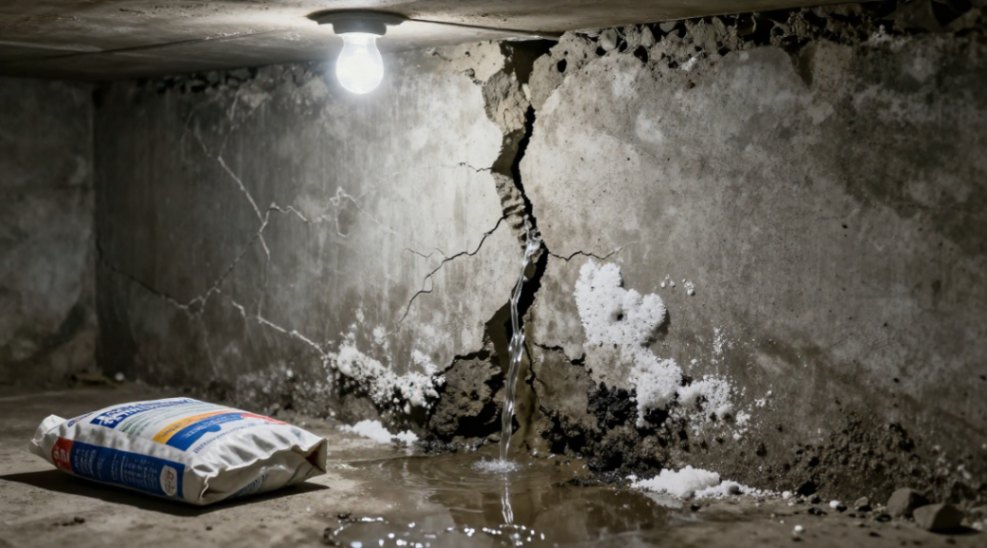
Is your foundation damp? Did your new water tank crack within a year? You followed the steps. You bought a special cement for waterproofing applications. Yet, failure persists. You are not alone. Many contractors face the same frustration because industry lore often gets it dangerously wrong. This is not a generic guide. This is a warning against the pitfalls that compromise structural integrity.
What NOT to Do with Waterproofing Cement: Your FAQ Survival Guide
We cut through the noise with direct answers. These are the questions real professionals ask when the job goes wrong.
“Can I just mix this special cement into regular concrete?”
Absolutely not. This is the cardinal sin. Special waterproofing cement is not a magical powder you sprinkle. It is a complete, engineered system. Mixing it with standard Portland cement disrupts the precise chemical balance of crystalline additives. You dilute its sole purpose: to grow non-soluble crystals that block water paths. The result is a weak, compromised barrier. Always use the product as a standalone mix for the sealing layer.
“Do I need to prepare the surface if I’m using a powerful cement?”
This mindset guarantees failure. The cement is only as good as its bond. The number one reason coatings fail is poor substrate preparation. You must chase out all loose material. The surface must be structurally sound, clean, and professionally pre-saturated. A dry, dusty concrete surface will suck the moisture from your fresh mix instantly, preventing proper hydration and crystal growth. Many users on construction forums report their mix “dried too fast” and cracked. The culprit was almost always a bone-dry substrate.
“Can I apply it like a thin paint layer?”
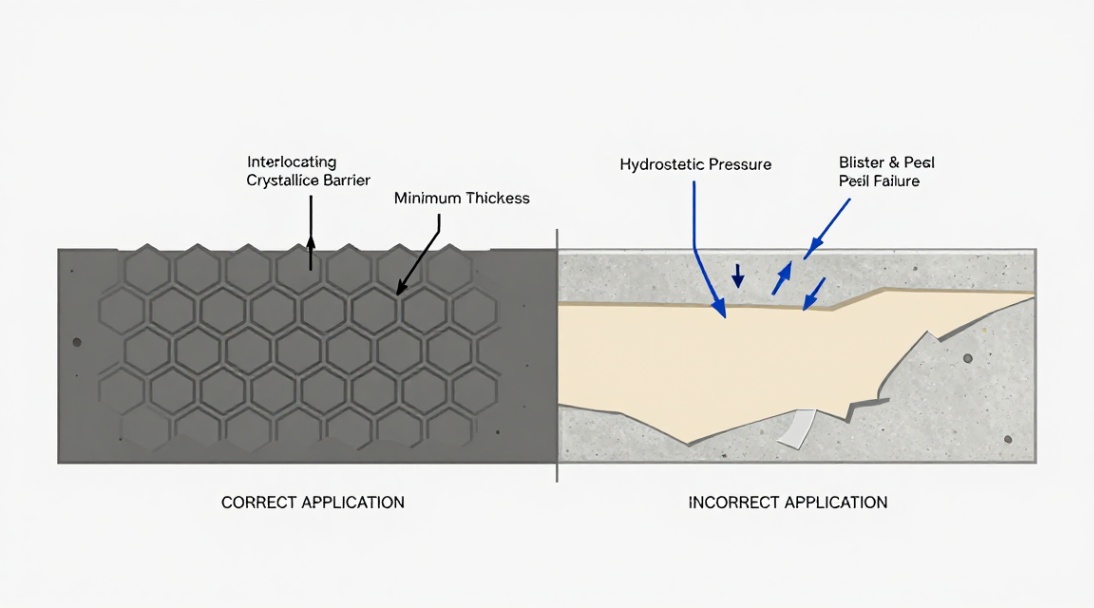
Never. Applying it too thin is a waste of material. The crystalline technology requires a minimum thickness-typically around 1/8 inch-to develop a continuous, interlocking barrier. A thin wash coat cannot withstand hydrostatic pressure. It will simply blister and peel. Apply it with the proper consistency (like a thick mortar) and at the specified thickness. This is non-negotiable for applications like basement walls or water retaining structures.
“The instructions say to cure it. Can I just let it air dry?”
Ignoring curing is like baking a cake and turning off the oven after five minutes. The chemical reaction that grows the waterproofing crystals requires sustained moisture. If the cement dries out prematurely, the reaction stops. You must keep the applied cement moist for at least 72 hours, typically by misting or covering with plastic. This is the most critical, yet most neglected, step.
Why Your Old Waterproofing Method is Obsolete
Stop patching. Stop layering membranes that can puncture. Integral crystalline waterproofing with special cement addresses the problem from within the concrete matrix itself. The active chemicals diffuse into the substrate, filling capillaries and micro-cracks with permanent crystals. This means the protection self-heals minor future cracks. It is not just a coating; it becomes part of the structure’s mass, resisting positive and negative water pressure. For foundation walls and buried concrete, this is the modern standard.
The Correct Path Forward: A Process, Not a Product
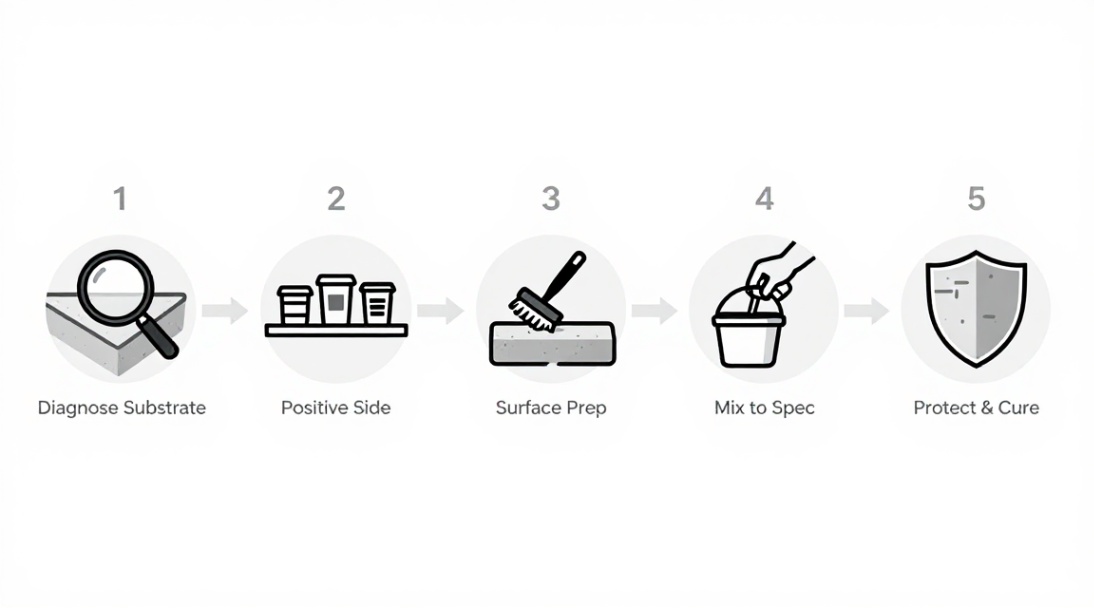
Success with special waterproofing cement is a disciplined sequence. First, diagnose your substrate. Second, select a product designed for your specific challenge-positive side, negative side, or blind-side application. Third, execute surface preparation without shortcuts. Fourth, mix and apply to the exact manufacturer’s specifications. Finally, protect and cure the installation vigilantly.
If this sounds rigorous, it is. The alternative is costly, recurring water damage. For your next critical project, move beyond basic advice. Consult the technical data sheets from reputable manufacturers. Better yet, request a sample of a proven crystalline waterproofing cement to test on your specific substrate. See how it reacts, bonds, and performs under simulated pressure. This hands-on test will reveal more than any sales brochure. Choose a system that turns the concrete itself into the water barrier.
Supplier
We are the global leader in lightweight concrete and advanced engineered foam solutions. Known globally for its commitment to research, innovation, and applied expertise, we have been providing engineered foam solutions since the early 2012’s.
We can supply high-quality concrete admixture and foam concrete related products all over the world.
The company has a professional technical department and quality supervision department, a well-equipped laboratory, and equipped with advanced testing equipment and after-sales customer service center.
If you are interested, please feel free and contact us.