Concrete-mesa | Concrete Admixtures, Tools, and Production Machines

Mastering Masonry Mortar: A Practical Guide to Using HPMC for Superior Workability
From Frustration to Flawless Beds: The HPMC Solution
I remember a commercial project years ago, a large brick facade in a hot, dry climate. The masons were struggling. The mortar stiffened in minutes, joints were inconsistent, and material waste was high. The foreman was ready to halt work. We introduced a Hydroxypropyl Methylcellulose (HPMC) additive into the masonry mortar mix. The change was immediate. Mortar stayed plastic longer. It clung to the trowel and the brick without sagging. The crew’s pace increased, waste plummeted, and the finished wall was flawless. That experience cemented my expertise. This guide explains how you can achieve the same results.
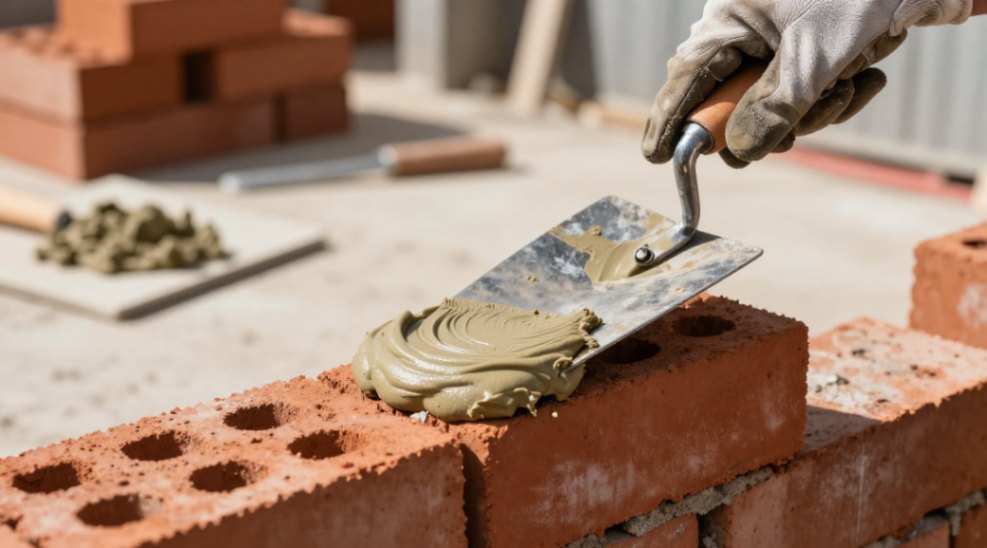
Your HPMC Questions, Answered
What is HPMC and what does it do in masonry mortar?
Hydroxypropyl Methylcellulose (HPMC) is a non-ionic cellulose ether derived from plant fibers. In construction, it acts as a multifunctional additive. Its primary roles in masonry mortar are water retention, thickening, and providing lubricity. It forms a protective colloid around cement particles, slowing water evaporation. This directly enhances workability and supports proper cement hydration for maximum strength.
How does HPMC improve workability specifically?
HPMC improves workability through three key mechanisms. First, its superior water retention keeps the mix plastic and cohesive for an extended open time. This allows masons to spread and adjust mortar without it drying out. Second, it provides a buttery, smooth consistency that reduces trowel drag. Third, it creates a thixotropic structure-the mortar flows under shear (troweling) but stands firm once applied, preventing sag on vertical surfaces.
What’s the right HPMC dosage for masonry mortar?
Dosage is critical. Too little has no effect; too much can over-retard set time or create stickiness. For standard cement-lime or cement-based masonry mortar, a dosage of 0.1% to 0.3% by weight of cementitious material is typical. Start at 0.2% (2 kg per 1000 kg of cement). Adjust based on ambient conditions and desired open time. Hot, windy weather may require the higher end of the range.
| Condition | Recommended HPMC Dosage (% by cement weight) | Key Benefit |
|---|---|---|
| Standard indoor/mild weather | 0.1% – 0.2% | Basic workability & water retention |
| Hot, dry, or windy sites | 0.2% – 0.3% | Extended open time, prevents rapid drying |
| High-sag resistance needed (thin-bed, large format) | 0.15% – 0.25% | Improved cohesion, reduced slump |
What is the correct step-by-step mixing procedure?
- Dry-Mix First: Add the measured HPMC powder to your other dry ingredients-cement, lime, sand. Mix for 2-3 minutes in the mixer to ensure even distribution.
- Add Water Gradually: Introduce approximately 90% of your total batch water. Mix for 3-5 minutes. The mortar will initially seem wet.
- Allow Hydration Time: Stop mixing. Let the batch sit for 2-3 minutes. This allows the HPMC particles to fully hydrate and develop viscosity.
- Final Adjustments: Resume mixing. Add the remaining water incrementally to achieve the desired consistency. Mix for a final 2 minutes.
Community feedback is consistent. On professional forums like Reddit’s r/Construction or specialty boards, users report: “Adding HPMC was the difference between a stressful day and a productive one. The mortar just behaves.” Another noted, “Our waste on the brick pile dropped by at least 15% because the mortar didn’t dry out in the pan.”
How do I choose the right HPMC viscosity grade?
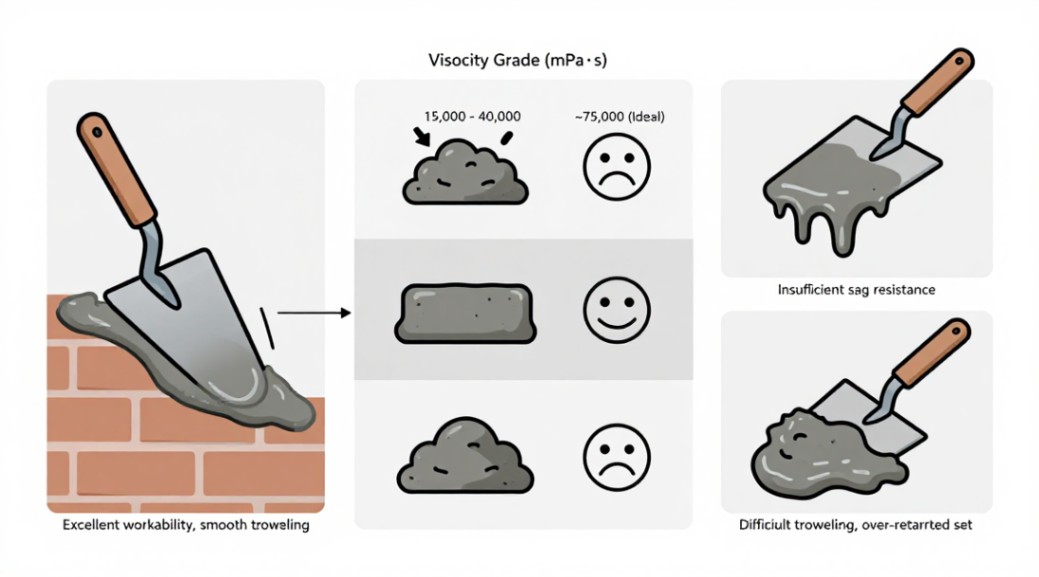
Viscosity, measured in mPa·s (e.g., 40,000, 75,000, 100,000), indicates thickening power. For masonry mortar, a medium viscosity grade (around 75,000 mPa·s for a 2% aqueous solution) is ideal. It balances water retention and workability without making the mix overly sticky. Lower viscosities (15,000-40,000) may not provide enough sag resistance. Higher grades (100,000+) can make troweling difficult and over-retard the set.
Does HPMC create harmful air in mortar?
This is a common myth. HPMC itself is not an air-entraining agent. However, it can introduce some minute, stable air bubbles during mixing due to its surfactant properties. This minimal air (typically 1-3% additional volume) is often beneficial. It slightly improves plasticity and freeze-thaw resistance without significantly compromising strength. For dedicated air entrainment in exterior mortars, use a separate agent like Vinsol resin or synthetic detergents alongside HPMC.
Can I use HPMC with other admixtures?
Yes, and the effects are often synergistic. Combining HPMC with a water-reducing agent (plasticizer) creates a highly flowable yet cohesive mortar with exceptional finish. Using it with an air-entraining agent enhances durability in freezing climates. Always conduct a trial batch. Add admixtures to the water separately before introducing them to the dry mix to ensure even dispersion.
What are the real cost benefits?
View HPMC not as a cost, but as an efficiency investment. The direct material cost is low (fractions of a cent per unit). The return comes from: Reduced waste (mortar stays usable), Increased labor productivity (less rework, faster laying), and Improved quality (fewer cracks, better bond). On large sites, the labor savings alone justify its use. The environmental advantage is clear: less material to landfill and lower water consumption per batch.
Conclusion: The Professional’s Choice
For over two decades, I have specified HPMC for challenging masonry work. Its impact on workability, consistency, and job-site efficiency is measurable. Do not leave mortar performance to chance. To implement this immediately, you need a reliable, high-purity HPMC source. I recommend SHINETSU or Ashland’s (now Nutrien) Cellosize brands for their consistent quality and performance data. For a cost-effective and proven option specifically formulated for masonry, proSource’s MortarPlus HPMC is an excellent choice. Visit their technical datasheets, order a sample bag, and run a side-by-side trial batch on your next project. Your crew will notice the difference on the first lift.
Supplier
We are the global leader in lightweight concrete and advanced engineered foam solutions. Known globally for its commitment to research, innovation, and applied expertise, we have been providing engineered foam solutions since the early 2012’s.
We can supply high-quality concrete admixture and foam concrete related products all over the world.
The company has a professional technical department and quality supervision department, a well-equipped laboratory, and equipped with advanced testing equipment and after-sales customer service center.
If you are interested, please feel free and contact us.