Concrete-mesa | Concrete Admixtures, Tools, and Production Machines

Don’t Let Foam Ruin Your Gypsum Plaster: The Silicon-Based Defoamer Guide You Need
The Plaster That Never Set
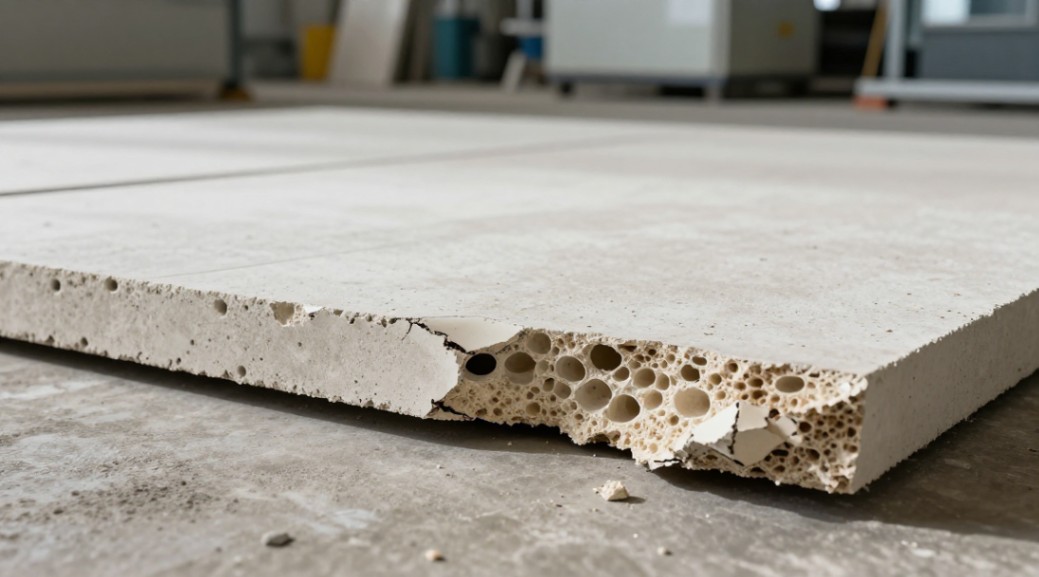
We had poured everything into a new premium plaster line. The lab tests were perfect. Strength, consistency, flow—everything met our spec. Then the first production batch went into the dryer. The result wasn’t smooth, hardened board. It was a crumbly, weak sheet, riddled with pinholes and subsurface voids. The culprit? Microscopic air bubbles trapped by a stubborn protein foam, left behind by an inadequate mineral oil defoamer. That failure cost us a week of production and a major client’s trust. I’m here to make sure that never happens to you.
Why Foam Control Isn’t Optional
Foam in gypsum slurry is a silent saboteur. Each tiny bubble represents a void in the final set plaster. These voids become failure points. They reduce compressive strength, create ugly surface pitting, and ruin the finish. Traditional defoamers, like those based on mineral oils or fatty alcohols, often struggle. They can be unstable, require high dosages, and may leave oily residues that affect hydration. The industry has shifted. As noted in the 2023 Global Gypsum Additives Report, silicon-based defoamers now command over 65% of the specialty defoamer market for plaster and cementitious products due to their efficiency and reliability.
The Critical Mistake: Choosing the Wrong Defoamer
This is your first and most important warning. Do not treat all defoamers as equal. Using a generic or incompatible defoamer is the fastest route to product failure. Let’s break down the critical differences.
Defoamer Performance: A Direct Comparison
| Factor | Mineral Oil / Fatty Alcohol Defoamers | Silicon-Based Defoamers |
|---|---|---|
| Defoaming Speed & Efficiency | Slader, often requires higher dosage. Can be “consumed” by the system. | Extremely fast and efficient. Low dosage provides persistent foam control. |
| Impact on Plaster Strength | High risk of strength reduction due to poor dispersion and air entrapment. | Excellent void elimination leads to optimal density and higher compressive strength. |
| Surface Finish Quality | May cause pitting, fish-eyes, or oily streaks. Unpredictable. | Promotes a smooth, uniform surface free of blemishes and pinholes. |
| System Compatibility | Often incompatible with modern superplasticizers and retarders, causing separation. | High compatibility with a wide range of admixtures. Stable in complex blends. |
| Long-Term Stability | Prone to separation, settling, and loss of efficacy over time. | Exceptional shelf life and thermal stability. Performance remains consistent. |
Warning: Three Application Pitfalls to Avoid
Choosing a silicon-based defoamer for gypsum plaster is the right first step. Applying it incorrectly will undo all the benefits. Heed these warnings.
1. Never Add It Directly to Dry Stucco
This is a catastrophic error. Adding a concentrated silicone defoamer to dry powder will cause localized coating and create severe mixing issues. The defoamer will not disperse. You will get clumps and ineffective foam control. Always pre-dilute the silicone-based product in a portion of your mixing water or a liquid co-additive before introducing it to the slurry stream.
2. Do Not Overdose
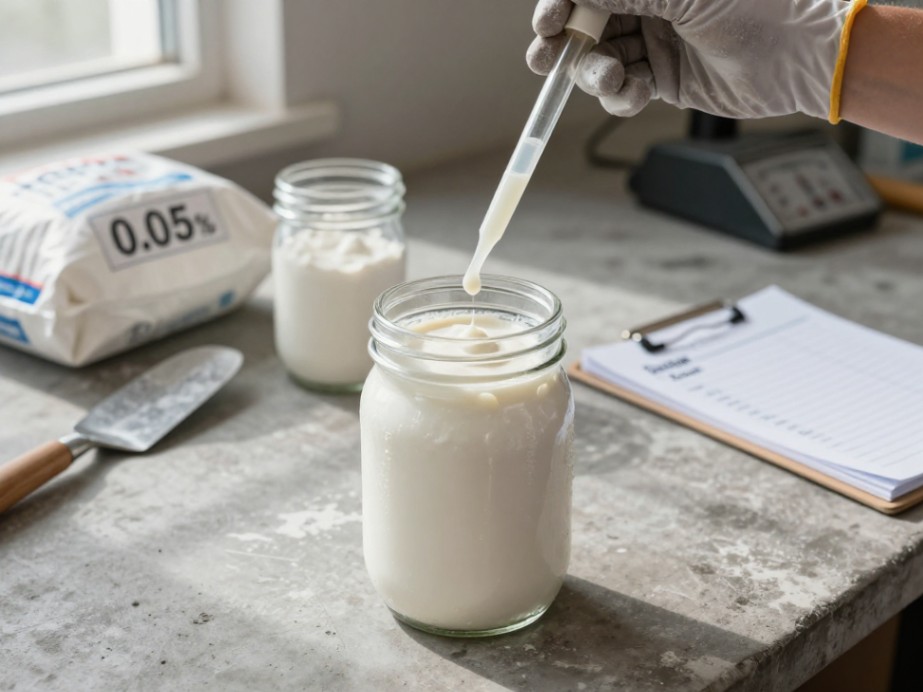
More is not better. Silicon-based defoamers are potent. Exceeding the recommended dosage (typically 0.05% to 0.2% by weight of stucco) can lead to surface sheeting, adhesion problems, and increased cost without benefit. Start low. Conduct a simple jar test to find the minimal effective dose for your specific stucco and water chemistry.
3. Ignoring Compatibility Tests
Never assume your new defoamer will play nice with your current retarder, starch, or dispersant. Incompatibility can cause coagulation, severe foam bursts, or total system collapse. You must run a small-scale compatibility test. Mix your full admixture suite at production ratios and observe for 30 minutes. Look for separation, gelling, or unusual viscosity changes.
Unlocking the Advantages of Silicon Chemistry
When applied correctly, a silicon-based defoamer transforms your process. Its core component, polydimethylsiloxane, has a low surface tension. It spreads rapidly across foam films, destabilizing them instantly. This action provides knock-down power for existing foam and inhibits new foam formation throughout mixing, pumping, and setting.
You gain predictable control. This reliability translates directly to your bottom line. You reduce raw material waste from failed batches. You eliminate downtime for cleaning fouled equipment. You achieve a consistent, high-quality finish that meets the most stringent specifications. The return on investment is clear and measurable.
Your Path to Flawless Plaster
The evidence is overwhelming. For reliable, high-performance foam control in modern gypsum plaster, a purpose-formulated silicon based defoamer for gypsum plaster is the only professional choice. It safeguards your product’s integrity and your operation’s profitability.
Your next step is critical. Don’t gamble with generic solutions. Begin by evaluating a dedicated silicone-based defoamer in your lab. Test it against your current additive package. Measure the difference in density, strength, and surface quality. The right product, like a well-engineered silicon defoamer, works silently in the background to ensure your plaster is consistently perfect, batch after batch. Make the switch with confidence, and leave foam-related failures behind for good.
Supplier
We are the global leader in lightweight concrete and advanced engineered foam solutions. Known globally for its commitment to research, innovation, and applied expertise, we have been providing engineered foam solutions since the early 2012’s.
We can supply high-quality concrete admixture and foam concrete related products all over the world.
The company has a professional technical department and quality supervision department, a well-equipped laboratory, and equipped with advanced testing equipment and after-sales customer service center.
If you are interested, please feel free and contact us.