Concrete-mesa | Concrete Admixtures, Tools, and Production Machines

Hydroxypropyl Methyl Cellulose for Tile Adhesive: The Invisible Hand That Makes or Breaks Your Tiling Job
The Floor That Never Dried
I watched a master tile setter lose his cool. A beautiful, intricate mosaic was sliding down the wall like a slow-motion glacier. His adhesive, mixed to the letter of the manufacturer’s instructions, was too wet. It refused to grip. He spent the next frantic hour propping tiles with tape and makeshift shims, fighting gravity tooth and nail. The stress was palpable. The waste of material and time, infuriating. That disaster wasn’t about cheap tiles or poor technique. It was a failure of chemistry. Specifically, it was the absence of the right type and amount of one critical ingredient: hydroxypropyl methyl cellulose for tile adhesive. That invisible polymer is the conductor of the entire tiling orchestra.
What Is This Chemical Maestro?
Hydroxypropyl methyl cellulose, or HPMC, isn’t a glue. Calling it a mere “additive” insults its function. It’s a water-soluble polymer derived from cellulose. Think of it as millions of microscopic sponges and webs. When introduced to water in your tile adhesive mix, these dry powder particles hydrate, swell, and dissolve. They don’t just sit there. They actively re-engineer the water’s behavior. This transformation gives HPMC its two primary superpowers in a tile adhesive formulation: thickening and water retention. The magic lies in how it wields these powers.
The Mechanism: Control, Not Just Bulk
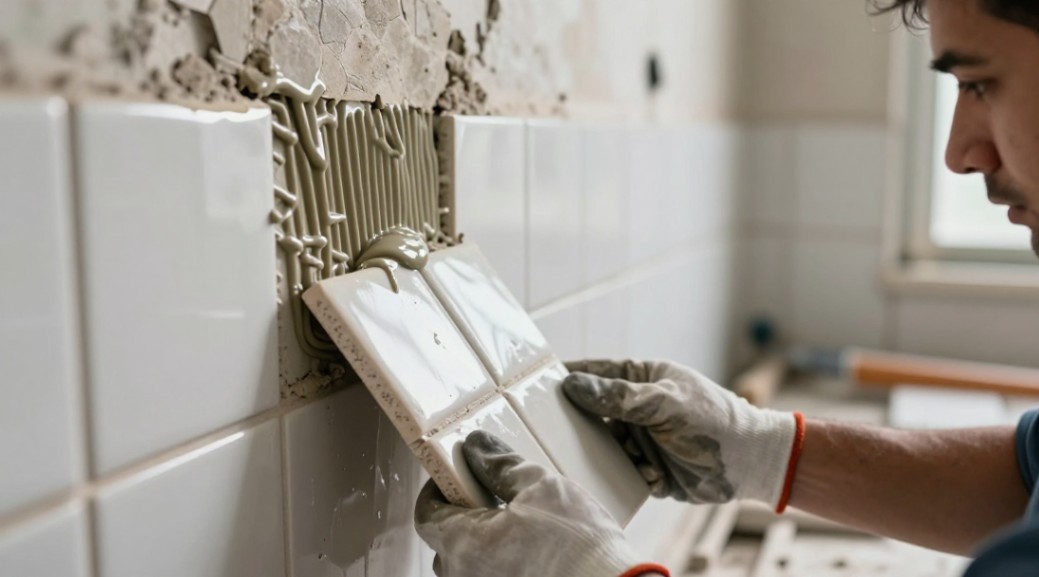
Let’s dismantle the tiling process through the lens of HPMC. You scoop powder, add water, and mix. Without HPMC, water is a passive lubricant. With HPMC, it becomes a structured gel network. This network immediately increases the viscosity of the mortar. It feels creamier, more cohesive. This isn’t about making it “thick” like pudding. It’s about imparting anti-sag performance. The gel structure provides yield stress—a gentle internal force that holds heavy tiles in place on vertical surfaces until the cement hydrates and sets. The mosaic doesn’t slide. The installer works with confidence, not desperation.
Now, the second act. Cement needs water to cure. In a porous setting or under hot, dry conditions, the mixing water can get sucked out of the adhesive too quickly by the substrate or the air. Starved of water, the cement reaction stalls. The adhesive becomes weak, powdery. It fails. HPMC’s gel network traps the water. It physically slows down its evaporation and migration. This water retention guarantees the cement has all the moisture it needs to develop full, long-term strength. It also grants the installer extended open time. You can spread adhesive over a larger area. You can adjust a tile ten minutes later without the mortar skinning over. This isn’t a luxury; it’s the difference between a rushed, flawed job and a precise, professional one.
Choosing the Right Invisible Hand
Not all HPMC is equal. This is where most off-the-shelf mortars fail generic specifications. The performance is dictated by two chemical levers: viscosity grade and the ratio of methoxy to hydroxypropoxy substitution.
A low-viscosity grade (e.g., 5,000 to 15,000 mPa·s) provides good workability and wetting without being too stringy. A high-viscosity grade (e.g., 60,000 to 100,000 mPa·s) delivers stronger anti-sag and higher water retention, crucial for large-format tiles or exterior applications. The substitution types are more subtle. Higher methoxy content generally improves water solubility and speeds up surface film formation. Higher hydroxypropoxy content enhances thermal gelation—the adhesive maintains better consistency in hot weather. For a universal tile adhesive, a balanced, medium-viscosity HPMC is often the engineer’s silent choice.
The Practical Payoff and The Non-Negotiable Rules
For the installer, the right hydroxypropyl methyl cellulose for tile adhesive means less physical strain. The mortar spreads smoothly, holds its notch, and grips the tile back without slump. It means predictability. The batch you mix at 8 AM behaves like the batch at 3 PM. It means reliability over challenging substrates. But this reliability hinges on two rules formulaters and users must never break.
First, dosage. Typically 0.2% to 0.5% of the dry mix weight. Too little, and you lose sag resistance and open time. Too much, and you can hinder cement hydration, slow strength development, and make the mix overly sticky and difficult to tool. Second, mixing procedure. HPMC needs time to hydrate. You must mix thoroughly, let the mortar slake (rest) for 5 minutes, then remix. This allows the polymer chains to fully develop that critical gel network. Shortcut this step, and you’re only getting a fraction of the performance you paid for.
Beyond the Hype: Solving Real Problems
Compared to other cellulose ethers like methyl cellulose (MC) or carboxymethyl cellulose (CMC), HPMC offers a superior balance. It has better tolerance for electrolytes (like the salts in cement), better clarity in mixes, and that crucial thermal gelation property. When you face a challenge—tiling over heated floors, working in a sun-baked bathroom, installing delicate natural stone that stains—the specific profile of your HPMC is often the unsung variable being tested.
So, what should you do next? If you’re a formulator, stop treating HPMC as a commodity. It is the primary dictator of your adhesive’s application personality. Dial in the exact viscosity and substitution type for your target market. If you’re a professional installer or a contractor specifying materials, start asking questions. Don’t just look at bond strength numbers on a data sheet. Ask about open time. Ask about non-sag characteristics for large formats. The answers will lead you back to the quality and type of cellulose ether used. In a world of complex chemistry, hydroxypropyl methyl cellulose for tile adhesive is the one variable that gives you direct control over the physics of the installation itself. Master its selection, and you master the job.
Supplier
We are the global leader in lightweight concrete and advanced engineered foam solutions. Known globally for its commitment to research, innovation, and applied expertise, we have been providing engineered foam solutions since the early 2012’s.
We can supply high-quality concrete admixture and foam concrete related products all over the world.
The company has a professional technical department and quality supervision department, a well-equipped laboratory, and equipped with advanced testing equipment and after-sales customer service center.
If you are interested, please feel free and contact us.