Concrete-mesa | Concrete Admixtures, Tools, and Production Machines

Superplasticizers and Specialty Admixtures Are Revolutionizing Fiber-Reinforced Concrete Siding
1. Introduction
Just 24 hours ago, James Hardie Industries announced a major expansion of its North American production lines to meet surging demand for high-performance concrete fiber siding—a move fueled by innovations in concrete admixtures. As homeowners increasingly seek low-maintenance, fire-resistant, and wood-look exteriors, the role of chemical admixtures has become central to achieving both functionality and visual appeal in cement-based siding products.
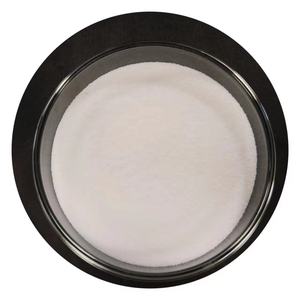
Concrete admixtures—often called ‘concrete chemicals’—are no longer just additives for basic workability or setting control. In niche applications like fiber-reinforced concrete siding, they enable manufacturers to fine-tune everything from flow during extrusion to long-term moisture resistance. Let’s dive into how specific admixture types are reshaping this growing segment of the building materials market.
2. The Rise of Concrete Fiber Siding
Modern concrete siding—also marketed as fibercement siding, concrete fiberboard siding, or cement house siding—combines Portland cement, sand, water, and cellulose or synthetic fibers. Brands like Hardie and CertainTeed dominate the space, offering panels that mimic wood grain while resisting rot, insects, and fire.
But producing these thin, large-format panels at scale demands exceptional control over the concrete mix. That’s where specialized admixtures come in. Without the right combination of plasticizer for concrete, fiber dispersion aids, and waterproofing admixtures, the final product could crack, warp, or absorb water—defeating its purpose as a durable cladding solution.
2.1. Superplasticizers: Enabling High-Fiber, Low-Water Mixes
One of the biggest challenges in manufacturing concrete fiber siding is incorporating high volumes of reinforcement fiber for concrete—such as polypropylene fibres for concrete or even coconut fiber reinforced concrete—without making the mix too stiff to process.
Enter superplasticizer admixture technology. Superplasticizers, particularly polycarboxylate ether (PCE)-based types, act as high-range water reducers that dramatically improve flow without adding extra water. This is critical because excess water weakens the final product and increases drying shrinkage.
- PCE superplasticizer allows up to 40% water reduction while maintaining workability
- Enables uniform distribution of macro fibers and microfibers in the mix
- Reduces energy consumption during extrusion or molding
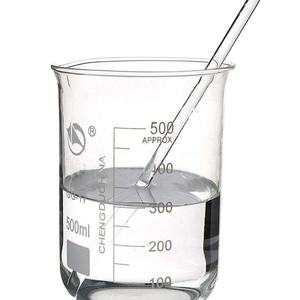
In fact, many leading producers now rely on superplasticizer in concrete formulations specifically engineered for thin-section precast applications like siding. These super plasticizers ensure the concrete fiber mix remains homogeneous during high-speed production runs.
2.2. Waterproofing and Durability Enhancers
Unlike structural concrete, siding is constantly exposed to rain, humidity, and temperature swings. Hence, integral waterproofers and crystalline waterproofing admixtures are essential.
Waterproof admix or concrete waterproofing additive options—such as cement waterproofing additive systems based on hydrophobic polymers or reactive crystalline technology—penetrate the matrix to block capillary pores. This prevents water ingress that could lead to freeze-thaw damage or efflorescence.
Some manufacturers also use air entraining admixture to create microscopic air bubbles that relieve internal pressure during freezing cycles. While traditionally used in pavements, air entraining concrete techniques are now adapted for exterior cladding in cold climates.
2.3. Accelerators, Retarders, and Curing Control
Production efficiency hinges on precise control of setting time. Fast curing concrete additives—like concrete accelerator blends—help reduce demolding time in factory settings, speeding up throughput.
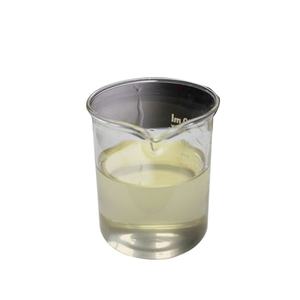
Conversely, surface retarder concrete agents may be applied to create textured finishes by delaying the set of the top layer, allowing for brushing or stamping effects that mimic natural wood grain.
The balance between accelerating admixtures for concrete and admixture retarder systems ensures consistent quality across batches, regardless of ambient conditions.
3. Beyond Performance: Aesthetics and Color Integration
Today’s concrete siding isn’t just gray slabs—it comes in charcoal, terra cotta, brown, and even white concrete finishes that resemble premium timber. Achieving vibrant, fade-resistant colors requires compatible admixtures.
Colored concrete powder pigments must be evenly dispersed, which is only possible with a well-plasticized base mix. Superplasticizer admixture improves pigment distribution, while release agents (like water-based release agent sprays) prevent staining during demolding without interfering with final color.
White cement is often used as a base for lighter shades, and when combined with a high-quality superplasticizer, it yields a smooth, bright surface ideal for modern architectural designs.
4. Conclusion
From superplasticizer in concrete to advanced waterproofing admixture systems, the evolution of concrete additives is directly enabling the next generation of fiber-reinforced concrete siding. These aren’t just minor tweaks—they’re foundational to meeting performance standards, aesthetic demands, and sustainability goals in residential construction.
As brands like Hardie scale production and new entrants explore bio-based fibers (like coconut fibre concrete), the synergy between fiber for concrete mix and smart admixture chemistry will only grow more critical. For builders and homeowners alike, the best admixture for concrete in siding applications is one that delivers durability, beauty, and resilience—all in a single panel.
Our Website founded on October 17, 2012, is a high-tech enterprise committed to the research and development, production, processing, sales and technical services of ceramic relative materials such as Superplasticizers. Our products includes but not limited to Boron Carbide Ceramic Products, Boron Nitride Ceramic Products, Silicon Carbide Ceramic Products, Silicon Nitride Ceramic Products, Zirconium Dioxide Ceramic Products, etc. If you are interested, please feel free to contact us.