Concrete4U | Concrete Admixtures, Tools, and Production Machines

How Are Advanced Admixtures Revolutionizing 3D-Printed Concrete Construction?
1. Introduction
Just 48 hours ago, Danish firm COBOD completed Europe’s tallest 3D-printed building—a six-story residential structure in Sweden—using a proprietary concrete mix enhanced with advanced admixtures. This milestone highlights a quiet revolution happening in construction: the strategic use of concrete admixtures to enable next-generation building techniques like 3D printing.
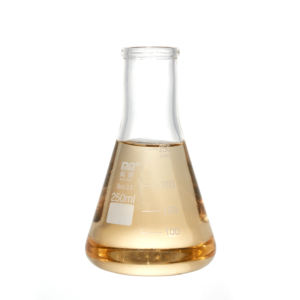
Unlike traditional poured concrete, 3D-printed concrete must flow smoothly through a nozzle, hold its shape instantly after deposition, and bond perfectly with previous layers—all without formwork. Achieving this demands a highly engineered cocktail of concrete chemicals. Let’s explore how specific admixtures make this possible.
2. Why Standard Concrete Fails in 3D Printing
Ordinary ready-mix concrete is too fluid or too stiff for extrusion-based 3D printing. It either collapses under its own weight or clogs the printer nozzle. Worse, it lacks the rapid setting time needed to support subsequent layers.
That’s where specialized admixture types come in. By fine-tuning rheology, setting behavior, and mechanical strength, modern concrete admixtures transform ordinary cement into a printable, buildable material.
3. Superplasticizers: The Flow Enablers
The backbone of any printable concrete mix is a high-performance superplasticizer. Specifically, polycarboxylate ether (PCE)-based superplasticizers are preferred for their ability to deliver extreme fluidity with minimal water.
These superplasticizer admixtures act as water reducers—often classified as high-range water reducing admixtures—allowing mixes to achieve slump values ideal for pumping and extrusion while maintaining low water-cement ratios. This ensures both printability and long-term strength.
Without a quality superplasticizer in concrete, achieving the ‘just right’ consistency would be impossible. Brands like Chryso admixture and other PCE-based solutions dominate this niche due to their precision control over workability.
4. Accelerators and Retarders: Timing Is Everything
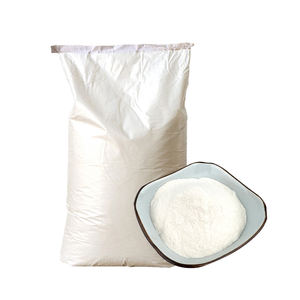
In 3D printing, each layer must set fast enough to support the next—but not so fast that it jams the system. This delicate balance is managed using accelerating admixtures for concrete and concrete retarder admixtures in tandem.
Concrete accelerator curing time is reduced strategically at the nozzle exit using fast curing concrete additives, while a surface retarder concrete may be used on early layers to prevent premature bonding issues. This dual-control approach is essential for vertical builds.
Some systems even use smart admixture dosing, where the concrete accelerator is injected only when needed, based on real-time print speed and ambient conditions.
5. Fiber Reinforcement: Building Strength Without Rebar
Traditional reinforced concrete relies on steel rebar—but 3D printers can’t weave cages mid-print. Enter fiber reinforced concrete. Micro and macro fibers—like polypropylene fibres for concrete, steel fibers for concrete, and even carbon fiber reinforcement in concrete—are mixed directly into the batch.
These reinforcement fibers for concrete improve tensile strength, reduce cracking, and enhance interlayer cohesion. Coconut fiber reinforced concrete is also being tested for sustainable builds, though synthetic fibers like PP fiber concrete remain industry standards.
Fibermesh concrete and fiber concrete mixes now routinely include optimized dosages of fibers to replace conventional reinforcement in non-load-bearing walls and facades.
6. Waterproofing and Durability Additives
Since 3D-printed structures often feature complex geometries with thin walls, durability against moisture is critical. That’s where waterproofing admixture for concrete steps in.
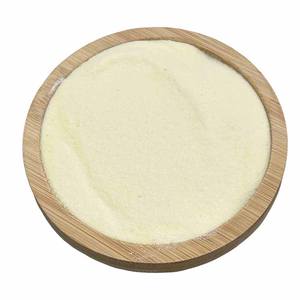
Integral waterproofer and crystalline waterproofing admixture types react with cement to form insoluble crystals that block capillary pores. Unlike surface sealers, these concrete waterproof admix systems work from within—ideal for monolithic printed walls.
Cement waterproofing additive and admixture waterproofing solutions ensure that even intricate designs remain weather-resistant without extra labor.
7. Foaming Agents and Lightweight Mixes
For non-structural elements like partitions or decorative panels, lightweight foam concrete is gaining traction. Here, a concrete foaming agent—often a protein-based foaming agent or synthetic foaming agent for concrete—creates stable air bubbles.
CLC foaming agent (Cellular Lightweight Concrete) allows builders to reduce material weight by up to 70%, lowering print head stress and foundation loads. Recent advances have made CLC foaming agent price more competitive, accelerating adoption.
8. The Future Is Printed—and Admixture-Optimized
As 3D concrete printing scales globally, the demand for tailored concrete additives will surge. Whether it’s a superplasticizer for cement flow, an air entraining agent for freeze-thaw resistance, or a mineral admixture for sustainability, every component must serve multiple functions.
The best admixture for concrete in this context isn’t one-size-fits-all—it’s a custom blend calibrated to printer specs, climate, and design. Companies are now publishing detailed bio data sheets for their admixture chemical formulations to meet this need.
9. Conclusion
From COBOD’s Swedish skyscraper to backyard garden walls printed at Home Depot-sponsored workshops, 3D concrete printing is no longer sci-fi. But behind every successful print is a hidden hero: the precisely engineered concrete admixture. As technology evolves, expect even smarter, greener, and more responsive admixtures to drive the future of construction—one layer at a time.
Our Website founded on October 17, 2012, is a high-tech enterprise committed to the research and development, production, processing, sales and technical services of ceramic relative materials such as How. Our products includes but not limited to Boron Carbide Ceramic Products, Boron Nitride Ceramic Products, Silicon Carbide Ceramic Products, Silicon Nitride Ceramic Products, Zirconium Dioxide Ceramic Products, etc. If you are interested, please feel free to contact us.