Concrete4U | Concrete Admixtures, Tools, and Production Machines

Hydroxyethyl Cellulose in Drilling Fluids: 5 Critical Mistakes You Cannot Afford to Make
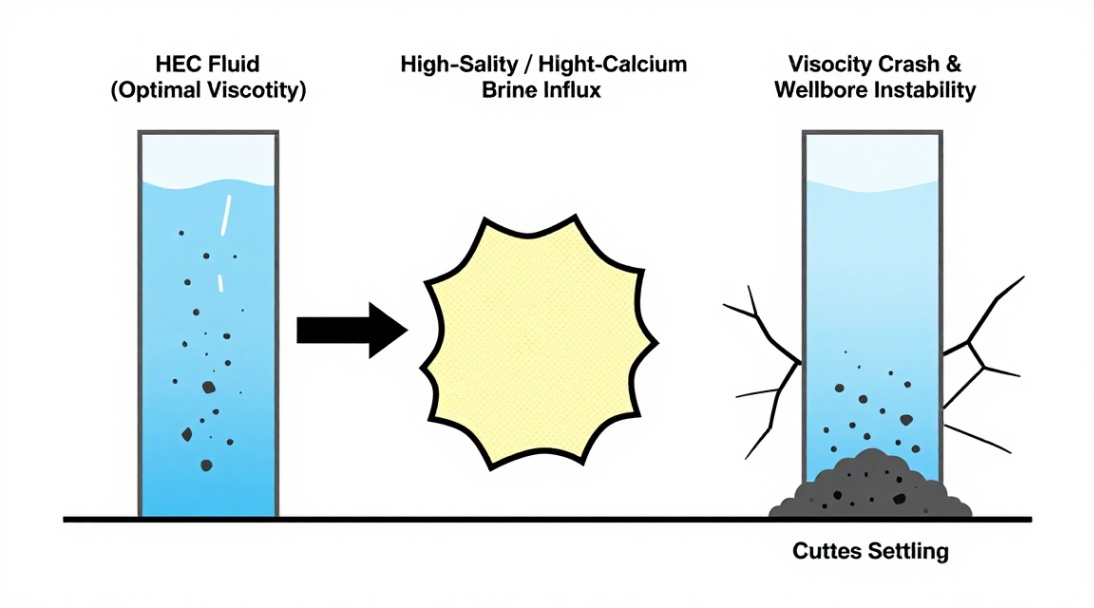
Have You Watched Your Fluid Viscosity Crash in High-Salinity Conditions?
You specified a premium viscosifier, but the moment your drill string hit that high-calcium brine pocket, your fluid turned to water. Cuttings settled. The wellbore started to look unstable. You were likely using the wrong polymer. In drilling fluid applications, the choice between hydroxyethyl cellulose (HEC) and alternatives like xanthan gum or PAC isn’t academic-it dictates success or failure. This article is a hard-won, boots-on-the-ground analysis. We’re not selling anything. We’re exposing the critical mistakes that compromise wellbore stability, hydraulics, and your budget.
Mistake 1: Assuming All Viscosifiers Behave the Same
Treating hydroxyethyl cellulose as a direct substitute for xanthan gum is a fundamental error. Their molecular architectures create distinct downhole behaviors.
- HEC is Non-Ionic: Its performance remains stable in the presence of high concentrations of monovalent and divalent salts (e.g., NaCl, CaCl2). It will not precipitate.
- Xanthan Gum is Anionic: It can lose viscosity or even precipitate in high-electrolyte environments, leading to sudden fluid loss control failure.
- The Logical Choice: For salt-saturated fluids, drill-in fluids for pay zones, or any application with potential brine influx, HEC provides predictable, robust rheology. Do not gamble with ionic polymers in known saline formations.
Mistake 2: Neglecting the Shear-Thinning Profile
Effective hole cleaning requires high viscosity at low shear rates. Efficient hydraulic horsepower demands low viscosity at high shear rates. HEC delivers both.
- High Low-Shear-Rate Viscosity (LSRV): This suspends cuttings during connections and in large annuli, preventing sag and stuck pipe.
- Low High-Shear-Rate Viscosity: This reduces pump pressure, increasing rate of penetration and lowering equivalent circulating density (ECD).
- The Wrong Focus: Chasing a single high-viscometer reading (e.g., 600 rpm) is pointless. You must evaluate the full rheological curve. HEC’s natural shear-thinning is a built-in efficiency tool.
Mistake 3: Poor Mixing and Dispersion Practices
Hydroxyethyl cellulose will form “fish-eyes”-gelatinous lumps that never properly hydrate. This wastes material and creates erratic fluid properties.
- Use a Vortex: Add HEC powder slowly to the vortex of vigorously agitated water. Never dump it into stagnant fluid.
- Control pH for Hydration: HEC hydrates most rapidly at a neutral to slightly alkaline pH (7-9). Pre-adjust your mixing water.
- Consider Premixing: For critical applications, pre-blend HEC with a dispersant like surfactant or a dry powder carrier to ensure even wetting.
Mistake 4: Overlooking Its True Filter Cake Quality
HEC is not a primary fluid loss additive like starch. Its fluid loss control is a byproduct of its mechanism.
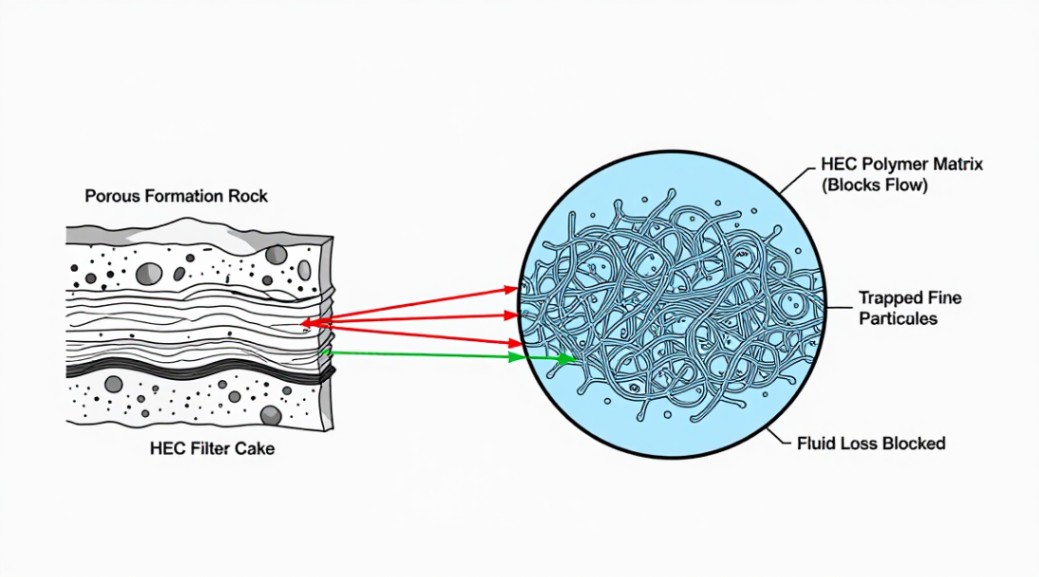
- The Mechanism: HEC molecules form a hydrated, gel-like network that physically restricts fluid movement. This creates a thin, slick, and compressible filter cake.
- The Advantage: This type of cake is less likely to cause formation damage in sensitive pay zones compared to rigid, granular cakes from some additives.
- The Warning: For severe fluid loss challenges, you must combine HEC with dedicated bridging agents and fluid loss polymers like PAC or starch. Do not rely on HEC alone for extreme low-fluid-loss specifications.
Mistake 5: Ignoring Synergy with Other Additives
HEC rarely works in isolation. Its non-ionic nature makes it an excellent team player.
- With Shale Inhibitors (e.g., KCl, Glycols): HEC’s viscosity helps deliver inhibitors to the wellbore wall, enhancing stability. It does not react negatively with cationic inhibitors.
- With Lubricants/Surfactants: It is generally compatible, improving film strength and lubricity without viscosity loss.
- The Critical Check: Always conduct compatibility tests at downhole temperatures. While stable, high heat can reduce HEC’s viscosity contribution; plan your concentrations accordingly.
The Objective Bottom Line
Hydroxyethyl cellulose is a specialist, not a universal polymer. Its value is unlocked through precise application. Use it as your go-to viscosifier for salt-tolerant, shear-thinning fluids in sensitive or challenging formations. Avoid it for applications requiring extreme, temperature-stable gel strengths or as a sole fluid-loss control agent. Your fluid design must start with the formation’s geology and chemistry, not with a favorite additive. This logical approach separates functional fluids from failed ones.
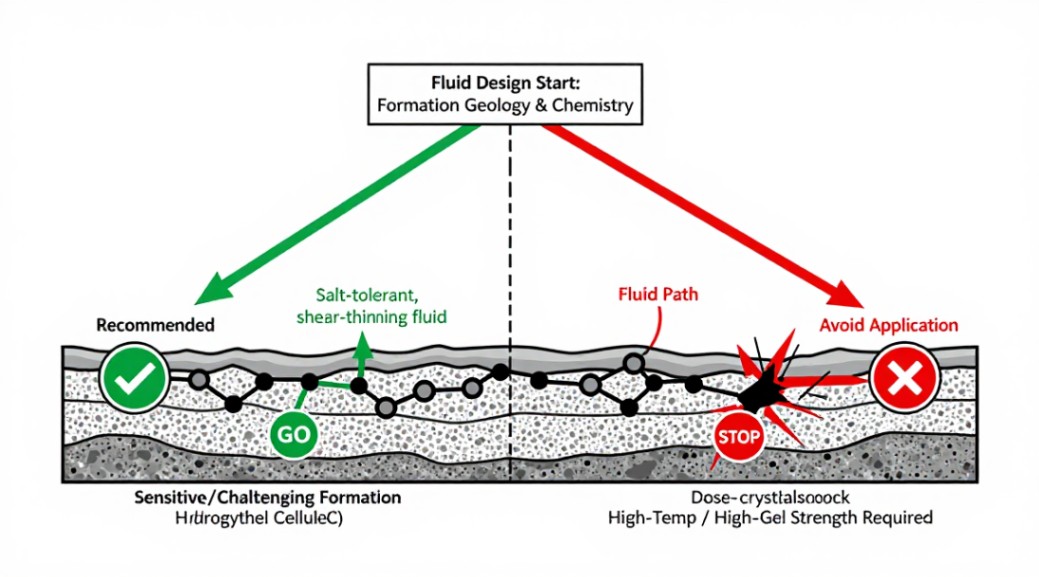
To implement this correctly, begin with a thorough audit of your upcoming well’s formation water analysis and temperature profile. Then, design your pilot fluid tests around those specific conditions, comparing HEC against other options head-to-head. The data will make the choice obvious.
Supplier
We are the global leader in lightweight concrete and advanced engineered foam solutions. Known globally for its commitment to research, innovation, and applied expertise, we have been providing engineered foam solutions since the early 2012’s.
We can supply high-quality concrete admixture and foam concrete related products all over the world.
The company has a professional technical department and quality supervision department, a well-equipped laboratory, and equipped with advanced testing equipment and after-sales customer service center.
If you are interested, please feel free and contact us.