Concrete-mesa | Concrete Admixtures, Tools, and Production Machines

Why a High Pressure Foam Generator is the Heart of Modern, High-Performance Concrete
Have you ever watched a promising pour of lightweight concrete turn into a frustrating puzzle of weak spots and inconsistent density? You mixed the slurry perfectly, but the final slab is a patchwork of uneven cells and disappointing thermal performance. You hear whispers about “air entrainment” or “faulty surfactant,” but the core of the problem often hums quietly, unnoticed. The issue isn’t usually your concrete. It’s your foam. More specifically, it’s the heart of your foaming operation: the foam generator. For decades, the transition from dense, heavy concrete to lightweight, insulating cellular mixes was more art than science, plagued by guesswork and variable results. That era is over. The shift toward reliable, high-performance cellular concrete is being driven by one piece of equipment: the high pressure foam generator for concrete.
The Core of the Revolution: Pressure, Precision, and Consistency
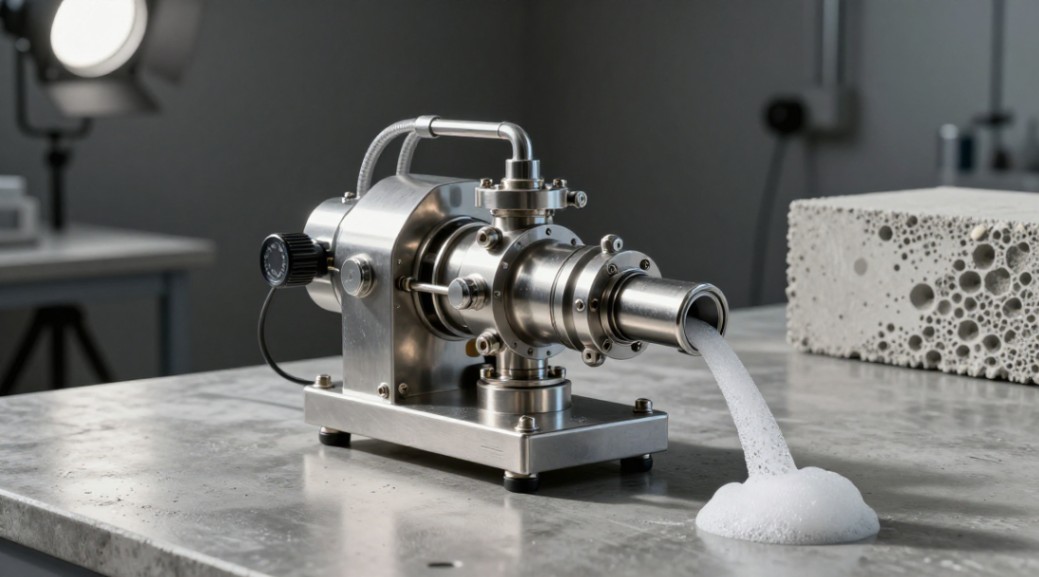
Let’s start simply. A high pressure foam generator for concrete is a precision instrument. Its function is singular but critical: to produce a consistent stream of microscopic, stable air bubbles-foam-and inject them into a cementitious slurry. This foam acts as a permanent, controlled void. Each bubble replaces a particle of sand or aggregate, dramatically reducing weight while imparting insulating properties. The magic word here is controlled. A low-pressure system essentially blows bubbles. It relies on a simple venturi effect, mixing air and foaming agent with water. The results can be usable for basic fill, but the bubbles are large, unstable, and prone to collapse or coalesce. You get a rough, unpredictable cellular structure. In contrast, a true high pressure foam generator operates on a different principle. It pressurizes a premixed solution of water and concentrated foaming agent, forcing it through a specialized nozzle assembly at pressures typically ranging from 80 to over 150 bar. This intense shearing action creates foam with a bubble size measured in tenths of a millimeter. The difference in the final product isn’t subtle; it’s the difference between a sponge and Swiss cheese.
I recall working on a large-scale insulating roof deck project years ago. The initial specs called for a 1000 kg/m³ density with a minimum compressive strength. Using an older low-pressure unit, we struggled to hit the target. Batches varied wildly. One section would be 950 kg/m³, the next 1100 kg/m³. The thermal rating was a moving target. We brought in a modern high-pressure system. The change wasn’t just in the numbers; you could see it. The foam exiting the lance looked like shaving cream-dry, stiff, and incredibly uniform. When blended, the concrete had a smooth, almost creamy consistency. Every test cylinder from that point forward was within 2% of the design density. The project’s lead engineer, a veteran with thirty years in precast, looked at the core samples and said, “This isn’t just better foam. This is a different material science.” He was right. The precision of the bubble structure directly dictates the mechanical and thermal properties of the hardened concrete.
Building the System: More Than Just a Pump
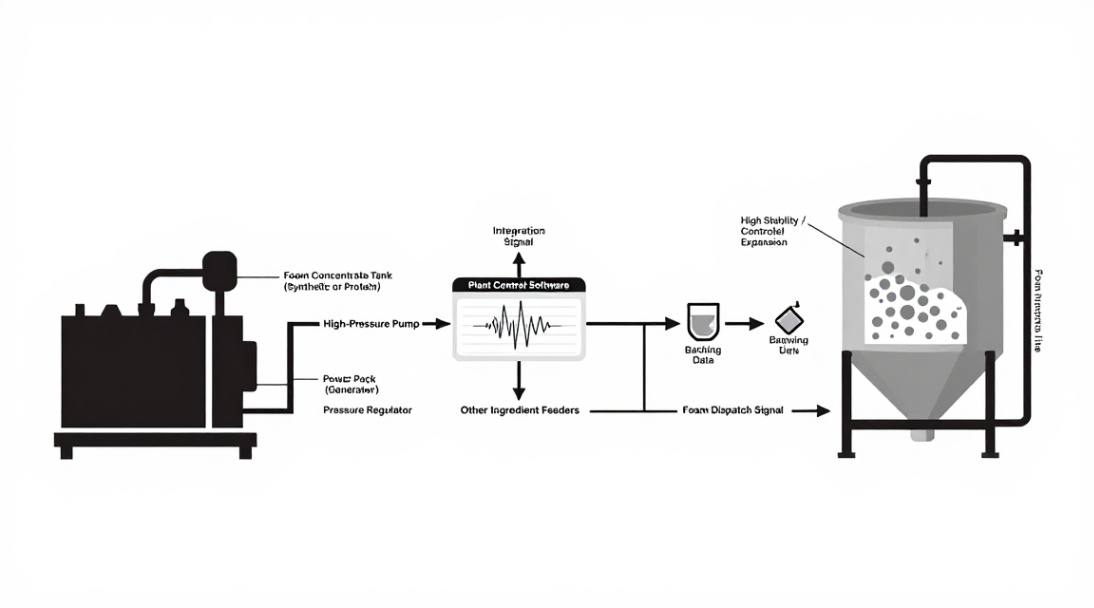
Understanding this machine means looking under the hood. It’s a system, not a single component. At its core, you have a high-pressure pump, often a positive displacement piston or plunger type, designed to handle the sometimes-corrosive nature of chemical concentrates. This pump feeds the pressurized liquid to the foam generating lance or nozzle block. Here, compressed air is introduced. The design of this mixing chamber is proprietary to every serious manufacturer and is where the real science happens. It’s a violent, precise ballet where liquid is atomized and sheared into microscopic films that encapsulate the air. Downstream, you have critical controls: a flow meter for the liquid solution, a regulator for the compressed air, and a density controller. This last component is your command centre. By adjusting the ratio of foam to base slurry, you dial in the exact wet density of your concrete in real-time. You’re not guessing; you’re engineering.
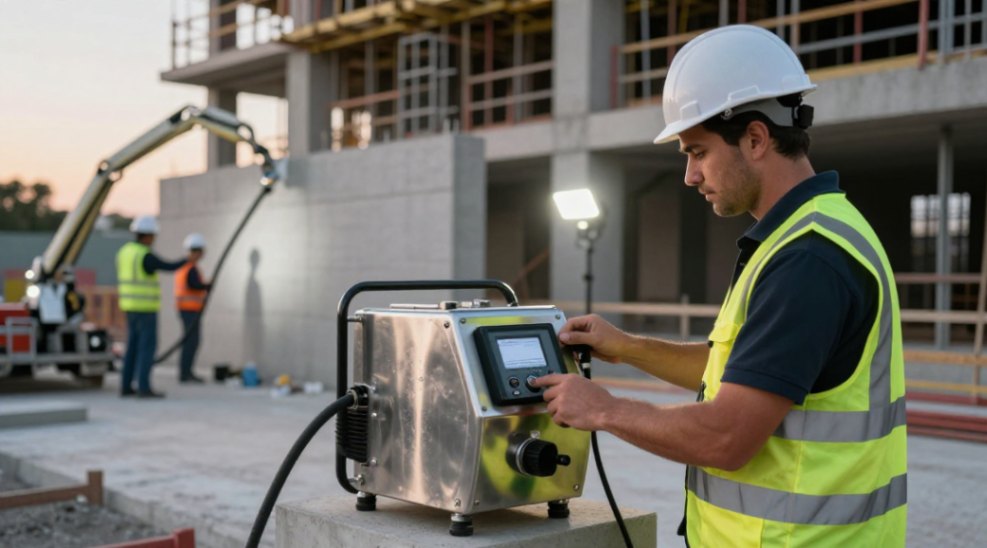
This level of control makes integration seamless. For a stationary batching plant, the generator ties directly into the control software, becoming another ingredient feeder. For mobile applications-think backfill operations or onsite roof decks-the system is often skid-mounted with its own power pack. The foam concentrate itself is a key partner. Synthetic-based agents are common, offering high stability and compatibility with various admixtures. Protein-based agents can provide exceptional strength but may have different handling requirements. The generator must be matched to the agent; the wrong combination can lead to poor expansion or rapid bubble breakage. The trend I’m seeing, backed by data from the International Cellular Concrete Association, is a sharp move toward closed-loop, automated systems. Manual valve adjustments are being replaced by digital interfaces that log every batch, providing a data trail for quality assurance. This isn’t just about making foam; it’s about manufacturing a certified, repeatable construction product.
The Practical Payoff: Where Theory Meets the Job Site
So, where does this all lead? The applications for concrete produced with a high pressure foam generator are expanding because the material’s properties are so predictable. Lightweight fill for unstable soils or over utilities is a classic use. You’re replacing heavy, compacted earth with a flowable, strong, and ultra-light material that exerts minimal lateral pressure. In building construction, the drive for energy efficiency has made insulating concrete floor slabs and roof decks a major growth area. The consistent, tiny air bubbles from a high-pressure unit provide superior and reliable thermal resistance (R-value) compared to the erratic performance of low-pressure foam. Precast manufacturers are embracing it for non-structural architectural panels, reducing weight for shipping and handling while adding insulation in a single pour. The benefits stack up: dramatic weight reduction (often 30-80% lighter than standard concrete), inherent thermal and acoustic insulation, and excellent flowability that reduces labor for placement.
But this capability demands respect. Operation and maintenance are not optional. You must follow a strict start-up and shut-down flushing procedure with clean water to prevent the concentrate from curing inside the pump and lines-a costly mistake. Regular inspection of seals and the nozzle for wear is essential; a worn nozzle destroys bubble structure silently. Safety procedures focus on the high pressure in the system; never service a pressurized line. When selecting a generator, you must think about your project scale. Output capacity is measured in liters of foam per minute. A small unit for precast tiles is different from a high-volume unit for continuous fill operations. Don’t buy for your biggest dream project; buy for your consistent, repeatable work. And prioritize a system with robust, responsive controls for density. That control is what you’re ultimately paying for.
The landscape of concrete construction is shifting beneath our feet. The demand for smarter, lighter, more energy-efficient buildings is not a fad; it’s the new code, the new specification, the new client expectation. Trying to meet that demand with outdated, inconsistent foaming technology is a recipe for callbacks, failures, and lost reputation. The path forward is clear. The data from job sites and laboratories alike points to one conclusion. If your work involves creating reliable, specification-grade cellular concrete, your next critical investment isn’t just a piece of equipment. It’s the foundation of your quality. You need to move to a professional-grade high pressure foam generator system.
The conversation starts with your specific mix design and output needs. Don’t experiment with undersized or generic equipment. Request a consultation and a live demo from a manufacturer who can show you the density curve and let you test the foam stability with your own materials. See the difference that precision pressure makes in your hands. Then make your move.
Supplier
We are the global leader in lightweight concrete and advanced engineered foam solutions. Known globally for its commitment to research, innovation, and applied expertise, we have been providing engineered foam solutions since the early 2012’s.
We can supply high-quality concrete admixture and foam concrete related products all over the world.
The company has a professional technical department and quality supervision department, a well-equipped laboratory, and equipped with advanced testing equipment and after-sales customer service center.
If you are interested, please feel free and contact us.