Concrete4U | Concrete Admixtures, Tools, and Production Machines

Building Lightweight Concrete Countertops: A Guide That Beats Heavy Weight & Cracking
The Story of the Basement Kitchen
We had a client who fell in love with concrete but faced a structural dilemma. Her dream kitchen was in a basement addition. The engineer took one look at her plan for traditional concrete countertops and shook his head. The weight was simply too much. That’s when we introduced her to lightweight concrete for countertops. The finished project was everything she wanted-modern, unique, and installable without compromising her home’s structure. This experience taught me that the craft isn’t just about aesthetics; it’s about physics and material science, and we’ll cover both here.
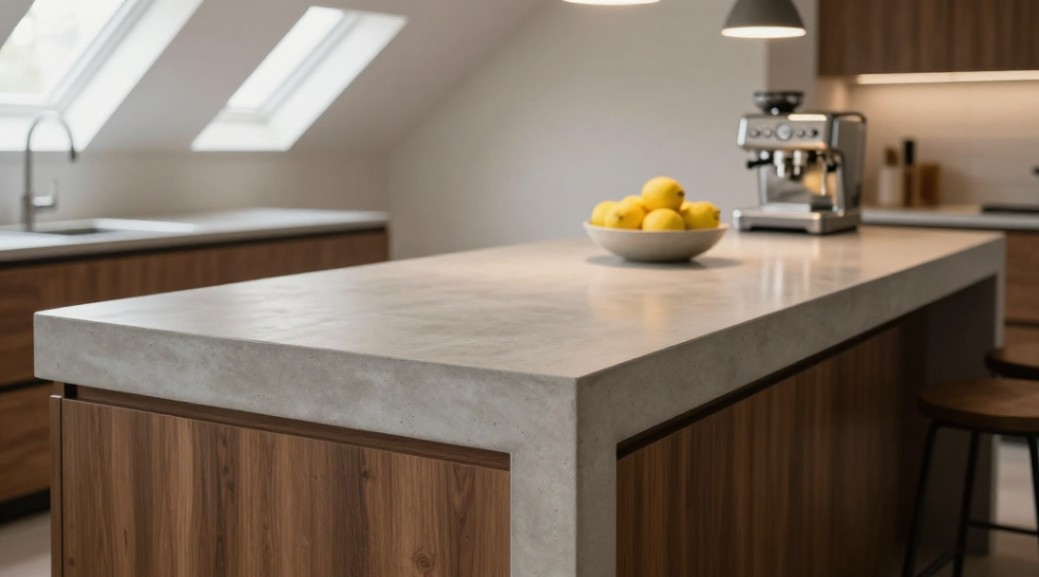
Core Questions on Making Lightweight Concrete Countertops
Why should I even consider lightweight concrete?
Traditional concrete weighs about 145 pounds per cubic foot. A good lightweight concrete countertop mix drops that to 100 pounds per cubic foot or less. That’s a huge difference. The primary benefit is weight reduction, which opens doors for installations on cabinets not built for stone, in RVs, or on second-story islands. But there are other advantages. It’s easier to handle during fabrication, provides slightly better thermal insulation, and we can achieve beautiful, modern looks with the right aggregates.
What’s the #1 secret to the mix design?
Aggregate selection. You must ditch traditional sand and gravel. The core of how to make lightweight concrete for countertops is swapping those for porous, low-density materials. The big three are: expanded clay (like LECA), expanded shale, or even post-consumer recycled glass aggregates. These particles have air pockets inside them, which drastically cuts the final density. We’ll choose the aggregate based on the desired finish. Glass gives a terrazzo-like sparkle, while expanded clay offers a more uniform, pumice-like texture.
How do I get strength without weight?
This is where newcomers get stuck. Lightweight aggregates are weak on their own. To compensate, we lean heavily on two things: a lower water-cement ratio and pozzolanic additives. Use a high-quality Portland cement and polymer additives. A liquid acrylic or SBR (styrene-butadiene rubber) polymer is non-negotiable. It dramatically increases the paste’s bond strength and flexibility. We also add a pozzolan like silica fume or metakaolin. This ultra-fine powder fills microscopic gaps, creating a denser, stronger, and less permeable cement paste that locks those lightweight aggregates in place.
What’s the critical mistake in the mixing process?
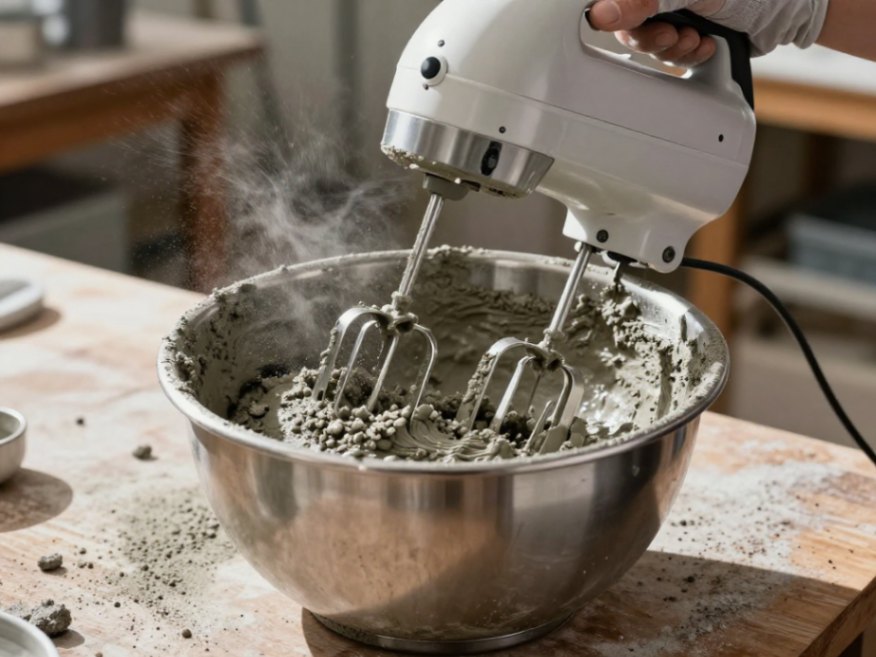
Letting the aggregates float. Lightweight aggregates want to rise to the surface in a wet mix. Our mixing procedure fights this. First, pre-soak your dry lightweight aggregates in water for at least 30 minutes. This saturates their pores so they don’t suck all the mixing water from the cement paste. Then, we mix in a specific order:
- Combine the pre-soaked aggregates with half the mixing water.
- Add the cement and pozzolan (like silica fume). Mix until just combined.
- Add the polymer additive to the remaining water, then pour that in.
- Mix for 3-5 minutes until you achieve a uniform, cohesive consistency-like thick oatmeal.
Avoid over-mixing, as it can break down the aggregates.
How do I cast and cure it properly?
Vibration is your best friend. After pouring the mix into your mold, use a vibrating table or a palm sander clamped to the mold’s side. This gentle agitation helps the mix flow into corners and pushes air bubbles to the surface, crucial for preventing surface pitting. Don’t over-vibrate, or the aggregates will separate. For curing, the process is slow and steady. Keep the cast piece covered with plastic sheeting for a full 7 days. This slow, moist cure prevents rapid drying and the shrinkage cracks that can ruin a slab. Many users on fabrication forums like Reddit stress this step as the difference between success and a cracked mess.
Finishing seems tricky. Any tips?
It is. The surface of lightweight concrete countertops can be softer and more porous than standard concrete. After demolding (wait at least 48 hours), you’ll need to grind the surface with diamond pads, starting coarse (50-grit) to level it, and moving to fine (3000-grit) for polish. The edges are vulnerable. Support them well in the mold, and use a denser edge mix or a thicker cement paste layer at the perimeter for extra durability. Sealing is the final, critical guard. Use a high-quality, penetrating lithium silicate densifier first, followed by several coats of an impregnating sealer. This combo locks out stains and gives you a workable surface.
Your Step-by-Step Process Summary
Here’s the consolidated workflow. Treat this as your checklist.
| Step | Key Action | Goal |
|---|---|---|
| 1. Design & Prep | Calculate volume, build a sturdy mold (melamine). | Avoid under/over-pouring; ensure shape integrity. |
| 2. Aggregate Prep | Pre-soak lightweight aggregates for 30+ minutes. | Prevent water theft from the cement paste. |
| 3. Mixing | Follow the wet-aggregate-first order. Add polymer. | Achieve uniform consistency; prevent aggregate float. |
| 4. Casting | Pour, then vibrate (table or sander). Screed top flat. | Eliminate air bubbles; achieve level surface. |
| 5. Curing | Cover with plastic for 7 full days. Do not disturb. | Develop full strength; prevent shrinkage cracks. |
| 6. Demolding & Finishing | Grind with diamond pads, densify, then seal. | Create a smooth, stain-resistant, functional surface. |
The Simple Truth About Getting Started
We’ve covered the theory, the common challenges, and the step-by-step method. But the real test is in the doing. Many DIYers and even some pros get tripped up by sourcing the right polymer additives and pozzolans, or they compromise on curing. After two decades, I know the single biggest boost to your success rate is using materials formulated for this specific purpose.
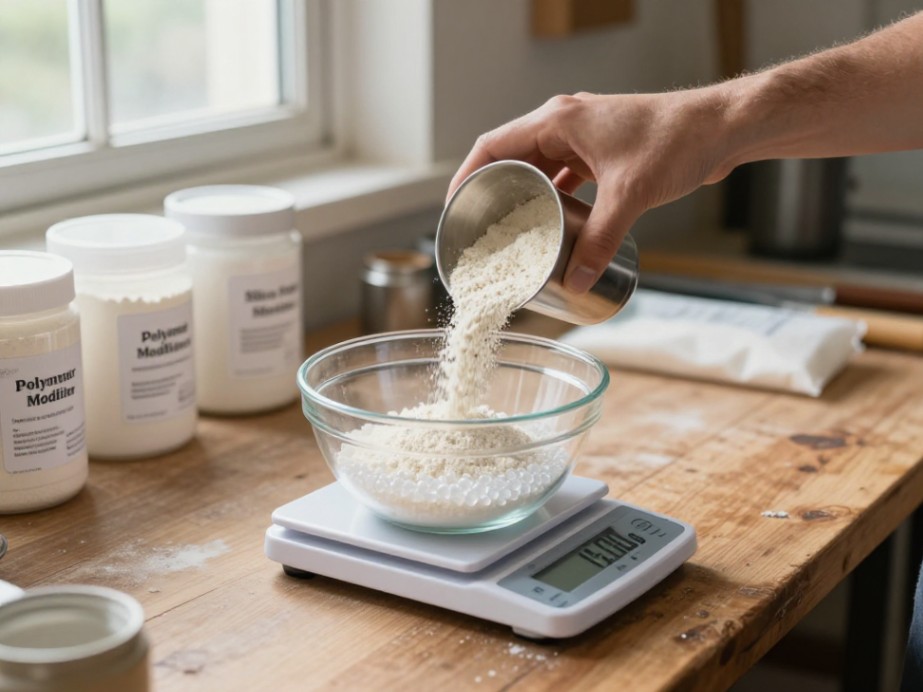
That’s why we developed our own Lightweight Countertop Pro Kit. It contains the exact polymer-modified cement blend, pre-graded expanded glass aggregate, and silica fume we use in our shop. No guesswork on ratios. No hunting for components. You get the strength and workability we rely on daily. Stop experimenting with random bag mixes. Use what we use. Click here to get the Pro Kit and build with confidence on your next project.
Supplier
We are the global leader in lightweight concrete and advanced engineered foam solutions. Known globally for its commitment to research, innovation, and applied expertise, we have been providing engineered foam solutions since the early 2012’s.
We can supply high-quality concrete admixture and foam concrete related products all over the world.
The company has a professional technical department and quality supervision department, a well-equipped laboratory, and equipped with advanced testing equipment and after-sales customer service center.
If you are interested, please feel free and contact us.