Concrete4U | Concrete Admixtures, Tools, and Production Machines

Non-Chloride Early Strength Admixtures: How They Work and When to Use Them
The Core Purpose of Non-Chloride Early Strength Admixtures
Non-chloride early strength admixtures accelerate concrete strength gain without introducing corrosion-causing chloride ions. We use them when schedule is critical and corrosion risk is unacceptable. Think cold weather pours, rapid formwork removal, or precast operations. The goal is faster production cycles, not just a stronger final product.
How They Work: A Simple Breakdown
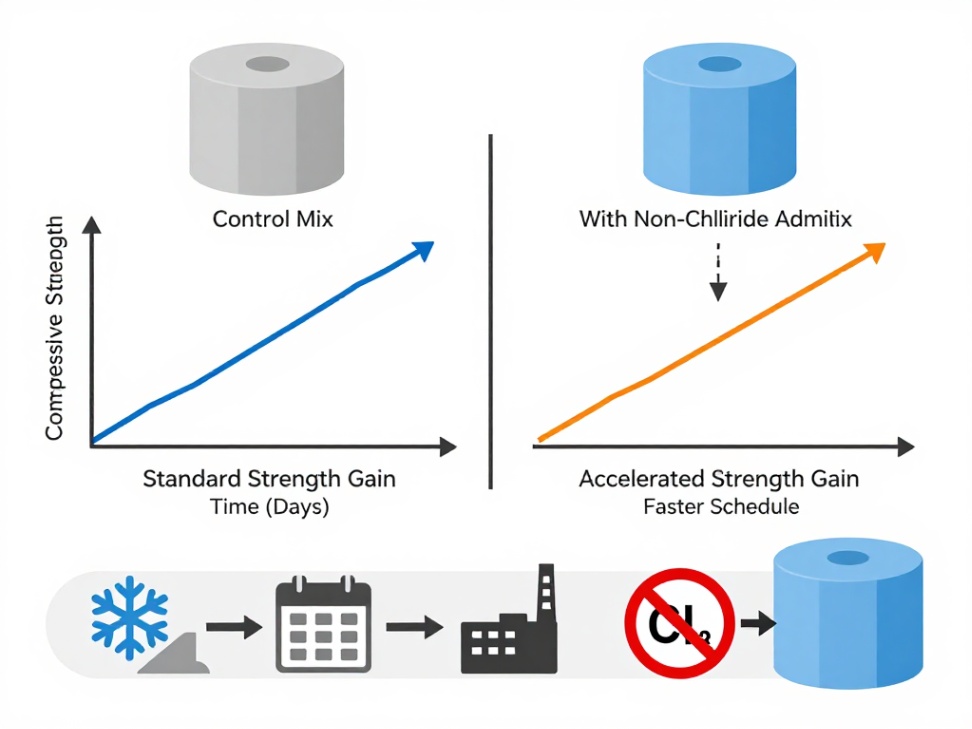
These admixtures don’t contain chlorides. Instead, they rely on chemicals like calcium nitrate or triethanolamine. Their primary mechanism is straightforward: they accelerate the chemical reaction between cement and water. This faster hydration rate means concrete develops usable strength in hours, not days.
Chloride-based accelerators achieve a similar speed but at a severe cost. Chlorides promote the corrosion of embedded steel rebar. This leads to cracking, spalling, and structural failure over time. Non-chloride formulas sidestep this entire problem.
Step-by-Step Guide to Using Non-Chloride Admixtures
Success depends on correct application. Follow these steps.
Step 1: Verify Your Project Needs It
First, confirm your situation demands acceleration. Common triggers include:
- Ambient temperatures below 50°F (10°C).
- A need to remove forms or post-tension within 12-24 hours.
- Projects where even minor corrosion risk is prohibited (parking structures, marine environments).
- Fast-track commercial jobs where every day saved is money earned.
Step 2: Calculate and Measure the Dosage Precisely
This is not a “more is better” situation. Dosage is typically 2-4% by weight of cementitious materials. Always follow the manufacturer’s data sheet. Under-dosing won’t give you the set time reduction you need. Over-dosing can cause rapid flash set, making the concrete unworkable, or reduce ultimate 28-day strength. Use a calibrated dispenser. Never guess.
Step 3: Integrate It Into the Mix Correctly
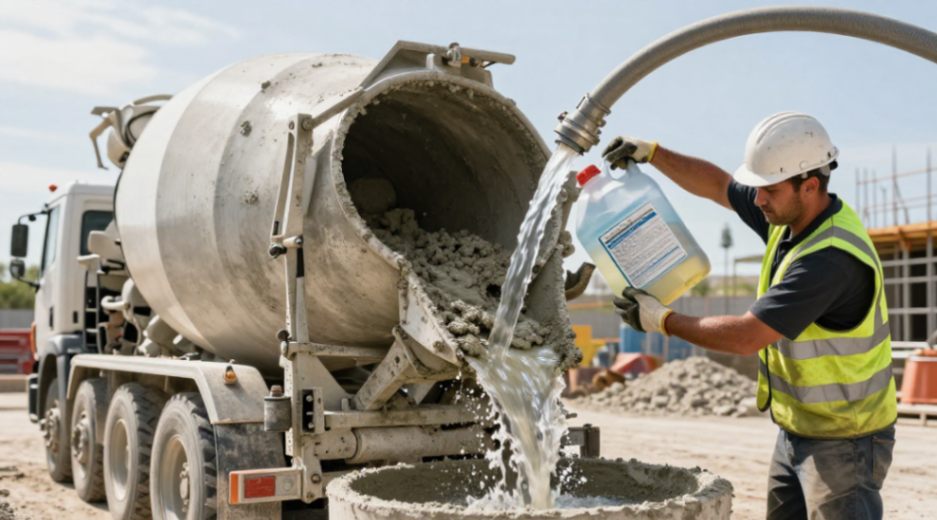
Proper addition sequence is critical for uniform performance. For most ready-mix plants, the standard procedure is to add the admixture with the initial batch water. This ensures thorough dispersion throughout the mix. If you’re adding it on-site, introduce it into the mixer drum while it is turning. Mix for the full time specified-usually an additional 30 seconds to 1 minute after addition. Consistency is key.
Step 4: Monitor and Adjust Curing Practices
Accelerated hydration generates heat faster. This is great for cold weather but risky in heat. Your curing plan must adapt. In cold conditions, the admixture’s heat generation helps protect the concrete. In warmer weather, you must be vigilant about moisture loss. Start curing immediately after finishing. Use wet burlap or curing blankets to retain that crucial moisture. The concrete gains strength quickly, but it still needs water to do so properly.
Beyond Early Strength: The Full Range of Benefits
While early strength is the headline, the benefits are broader.
- Corrosion Protection: This is the primary advantage over chloride-based types. You get speed without sacrificing the long-term durability of reinforced concrete.
- Cold Weather Reliability: They lower the practical temperature limit for pouring. Many crews report successful placements just above freezing where standard concrete would stall.
- Improved Workflow: Faster formwork reuse and earlier loading of slabs means tighter, more profitable project schedules.
- Compatibility: Quality non-chloride accelerators work well with mid-range water reducers. This allows you to adjust workability and speed simultaneously. Always run a trial batch if combining admixture systems.
What You Need to Know About Specifications and Safety
Look for compliance with ASTM C494 Type C (Accelerating) or Type E (Water-Reducing and Accelerating). This is your baseline for performance verification. On the jobsite, treat these chemicals with respect. Wear gloves and eye protection. Avoid skin contact and inhalation of mists. Store containers in a cool, dry place and keep them sealed. A spilled drum is a wasted cost and a potential environmental issue.
The Real-World Verdict from the Field
The feedback is consistent. Project managers on cold-weather bridge decks swear by them to hit early opening deadlines. Precast plant foremen rely on them for a reliable 18-hour turnaround on architectural panels. The common thread? They provide predictable, chloride-free acceleration. As one veteran superintendent put it, “We won’t even stock chloride accelerators anymore. The risk isn’t worth the minor cost difference.” The industry has moved on.

Making the Smart Choice for Your Project
Choosing a non-chloride accelerator is a straightforward cost-benefit analysis. The upfront cost per cubic yard is higher than doing nothing. You must weigh this against the value of saved time, reduced heating costs in winter, and eliminating corrosion-related callbacks. For most commercial and infrastructure work, the math is compelling. Your specification should mandate “non-chloride accelerating admixture conforming to ASTM C494” to guarantee performance and safety. Then, partner with a supplier who provides clear technical data and on-site support. The right admixture, applied correctly, turns time from your biggest constraint into a manageable variable.
Supplier
We are the global leader in lightweight concrete and advanced engineered foam solutions. Known globally for its commitment to research, innovation, and applied expertise, we have been providing engineered foam solutions since the early 2012’s.
We can supply high-quality concrete admixture and foam concrete related products all over the world.
The company has a professional technical department and quality supervision department, a well-equipped laboratory, and equipped with advanced testing equipment and after-sales customer service center.
If you are interested, please feel free and contact us.