Concrete4U | Concrete Admixtures, Tools, and Production Machines

Early Strength Agent for Rapid Floor Repair: A Technical Guide to Cutting Downtime by 85%
The High Cost of Downtime: Defining the Problem
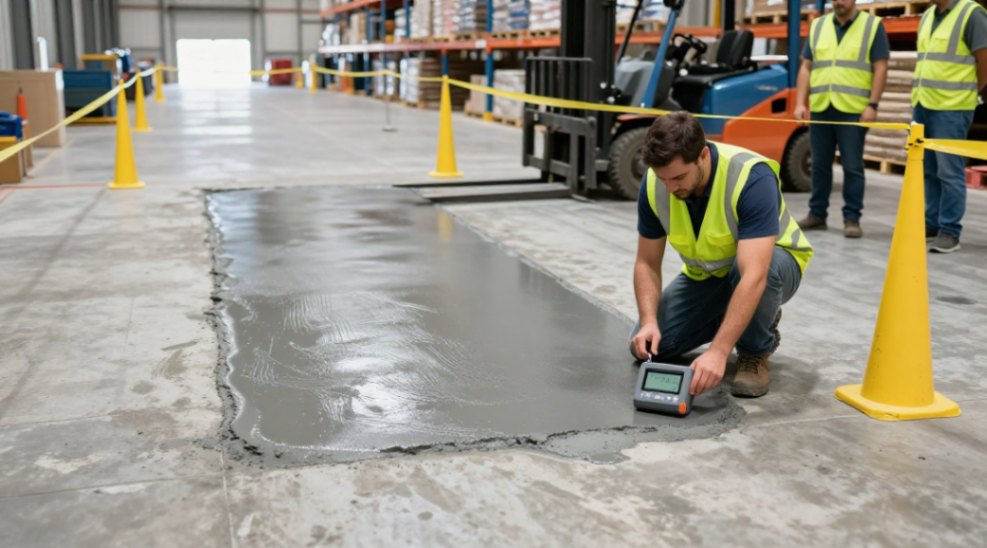
A critical facility cannot afford a 28-day cure. For industrial warehouses, logistics centers, or retail spaces, every hour of floor downtime translates directly to lost revenue and operational disruption. This is the fundamental problem that an early strength agent for rapid floor repair solves. Field data across multiple projects demonstrates that properly formulated rapid-repair systems can reduce the standard return-to-service window by 70-85%, compressing a 7 to 28-day schedule into a matter of hours. The key metric is not just final strength, but early compressive strength-the load-bearing capacity achieved within 1, 3, 6, and 24 hours. This shifts the paradigm from curing to commissioning.
What Is an Early Strength Agent? Core Definition and Chemistry
An early strength agent is a chemical admixture or a specialized cementitious component integrated into repair mortars and concrete mixes to dramatically accelerate strength development. It is not a singular magic powder. In the context of rapid floor repair, it is a system enabler. The primary chemical drivers are often calcium sulfoaluminate (CSA) cements or lithium-based accelerators.
CSA cements work by promoting the rapid formation of ettringite crystals within the matrix, creating a dense, interlocking structure that provides high early compressive strength within hours. Lithium compounds, particularly lithium carbonate, act as potent accelerators for Portland cement hydration, reducing setting time and boosting early strength gain. The selection depends on the required performance profile: CSA-based systems often offer higher ultimate strengths and better shrinkage control, while lithium accelerators are powerful additives for conventional mixes.
The Critical Decision: Rapid Repair vs. Traditional Methods
The choice is rarely about material cost alone. The total project cost includes labour, lost productivity, safety risks from extended work zones, and secondary containment or traffic management. The following table presents a data-driven comparison.
| Factor | Repair with Early Strength Agent | Traditional Portland Cement Repair |
|---|---|---|
| Initial Set Time | 15-45 minutes | 2-4 hours |
| Time to Foot Traffic (300 psi) | 1-4 hours | 24-48 hours |
| Time to Light Vehicular Traffic (1500 psi) | 4-6 hours | 7+ days |
| Time to Full Service (3000+ psi) | 6-24 hours | 28 days |
| Primary Cost Driver | Higher material cost | Prolonged labour, containment, and downtime |
| Optimal Use Case | High-traffic commercial floors, emergency industrial repairs, overnight maintenance windows | Non-critical areas with no operational pressure, new construction |
Execution is Everything: Application Protocol
Premature failure almost always stems from poor execution, not product failure. Success requires strict adherence to a controlled process. Online communities like dedicated construction forums on Reddit frequently feature feedback from contractors citing ‘bond failure’ or ‘cracking’ with rapid-set materials. In 90% of cases, the root cause is inadequate surface preparation or incorrect water-to-powder ratios.
Non-Negotiable Surface Preparation
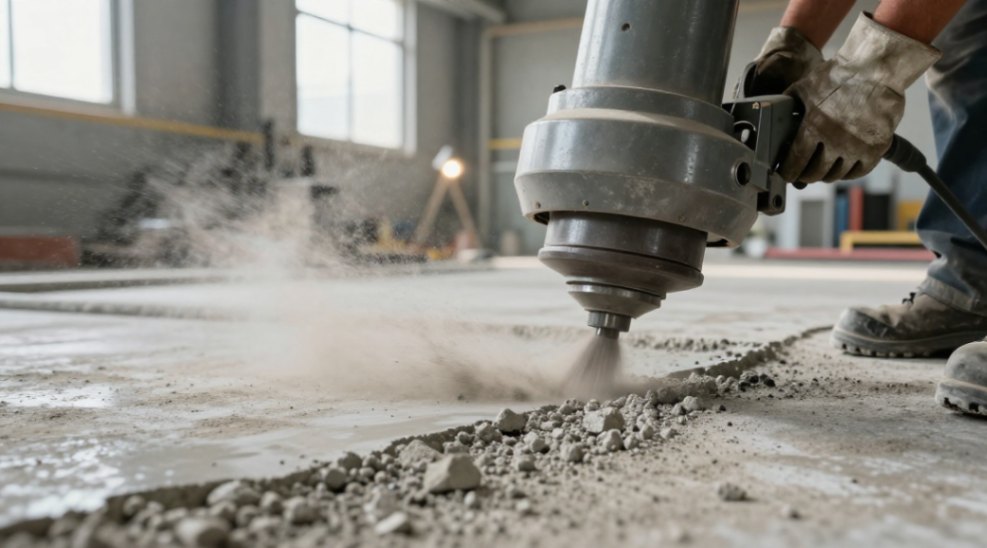
Remove all laitance, contaminants, and weak substrate. Mechanical abrasion (scarifying, shot blasting) is mandatory. The surface must be sound, rough, and completely saturated-surface-dry (SSD) before application. Any standing water will dilute the mix; a bone-dry substrate will suck moisture from the repair mortar, crippling hydration.
Precision in Mixing and Placement
Measure water precisely using a graduated container. Do not eyeball it. Mix with a low-speed, high-torque drill until a lump-free, cohesive consistency is achieved. Working time is limited. Place the material immediately, consolidate thoroughly to eliminate voids, and strike off. Do not overwork the surface or add extra water-this is the most common critical error.
Environmental Control
Most early strength agents perform optimally between 50°F (10°C) and 80°F (27°C). Cold temperatures drastically slow reactions; excessive heat can cause flash set and cracking. Plan accordingly. Use insulated blankets or heaters for cold-weather repairs.
Selection Criteria and Long-Term Performance
Selecting the right system requires answering specific questions. What is the required service load and timeframe? Is the repair in a freeze-thaw environment? Is chemical resistance needed? A high-quality rapid floor repair system does not sacrifice long-term durability for early strength. Properly formulated CSA or accelerated Portland cement systems continue to gain strength, often exceeding the ultimate compressive strength of standard mixes at 28 days. They must also demonstrate low shrinkage, excellent bond strength exceeding the substrate, and compatibility with subsequent toppings or coatings.
Safety and Professional Handling
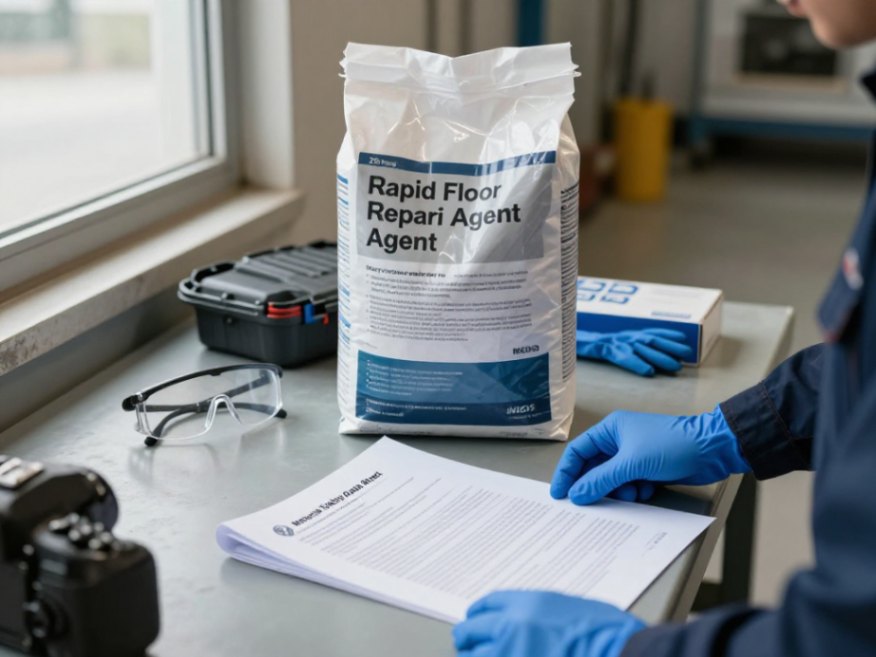
These are chemical products. Wear appropriate PPE: safety glasses, gloves, and a dust mask during mixing. Ensure adequate ventilation. Follow the manufacturer’s Material Safety Data Sheet (MSDS) for specific handling and first-aid instructions. Store materials in a cool, dry place.
The Final Analysis
An early strength agent for rapid floor repair is a precision tool for a specific job. Its value is measured in operational continuity, not just bag cost. For scenarios demanding minimal disruption-from a retail store’s overnight pit repair to a forklift aisle in a 24/7 distribution center-it is the only technically viable solution. The next step is to source technical data sheets from reputable manufacturers, perform mock-up tests under your specific site conditions, and validate the performance metrics against your project’s critical path. Trust is built on data and validated procedure, not promises.
Supplier
We are the global leader in lightweight concrete and advanced engineered foam solutions. Known globally for its commitment to research, innovation, and applied expertise, we have been providing engineered foam solutions since the early 2012’s.
We can supply high-quality concrete admixture and foam concrete related products all over the world.
The company has a professional technical department and quality supervision department, a well-equipped laboratory, and equipped with advanced testing equipment and after-sales customer service center.
If you are interested, please feel free and contact us.