Concrete4U | Concrete Admixtures, Tools, and Production Machines

Cellular Lightweight Concrete Density Range: Your 2024 Guide to Choosing the Right Type
Does Your Project Feel Heavy? You’re Not Alone
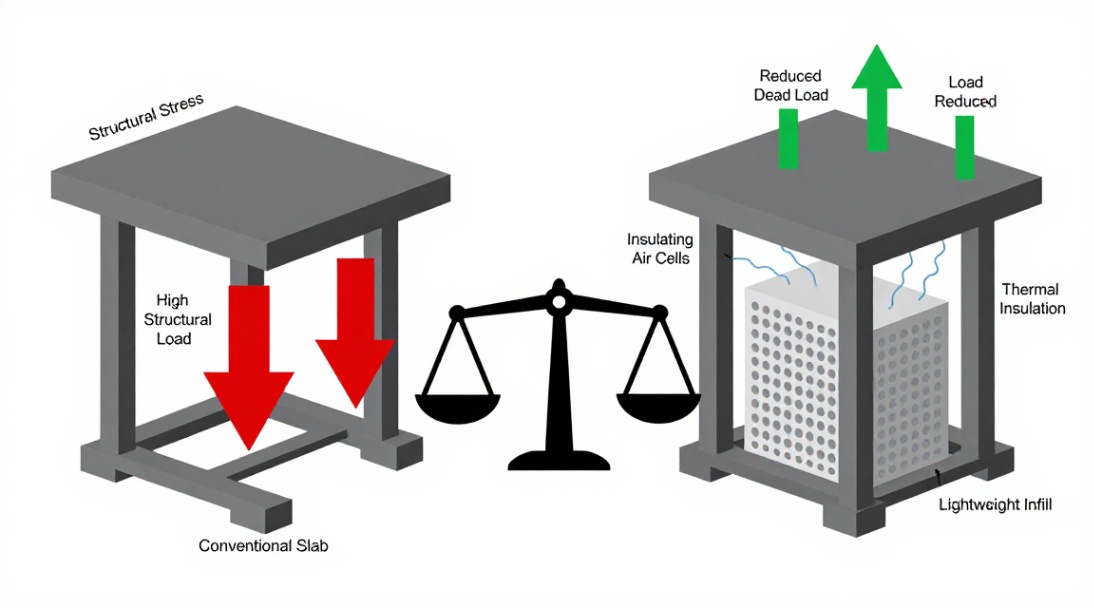
Have you ever stared at a project plan, worried that a conventional concrete slab will overload your structure? Perhaps you’re retrofitting an old building and need a lightweight infill. Maybe you’ve been searching for better thermal insulation but can’t find a material that’s both light and strong enough. If so, you’ve found the right guide. Choosing the correct cellular lightweight concrete density range is the single most important decision you’ll make. Get it right, and your project benefits. Get it wrong, and you face costly compromises. Let’s get it right together.
CLC Density 101: What Are You Actually Choosing?
Cellular lightweight concrete (CLC) isn’t one product. It’s a family. Think of it like choosing milk-you have skim, 2%, and whole. The core difference is air. CLC mixes a cement, sand, and water slurry with a stable, pre-formed foam. More foam equals more air. More air equals a lower density. This simple foam-to-slurry ratio creates the entire cellular lightweight concrete density range, typically from 400 kg/m³ to 1800 kg/m³.
The CLC Density Spectrum: Pros, Cons, and Real-World Use
Based on decades of field applications and consistent feedback from builders on forums like Reddit and contractor boards, we can break CLC into three practical categories.
1. Low-Density CLC (400 – 800 kg/m³)
The ultra-lightweight champion. At this end of the cellular lightweight concrete density range, you’re dealing with a material that’s mostly air.
- The Good Stuff:
- Superb Insulation: Thermal conductivity is extremely low. Perfect for roof screeds and wall cavities in cold climates.
- Ultra-Light: Dramatically reduces dead load on structures. A lifesaver for renovations.
- Easy to Handle: Can be cut and shaped with woodworking tools.
- The Trade-offs:
- Lower Strength: Compressive strength is low, typically 1-4 MPa. It’s not for load-bearing.
- Surface Vulnerability: Can be friable and may require a protective coating.
- When to Use It:
- Roof insulation screeds.
- Non-structural partition walls.
- Trench reinstatement and pipeline bedding.
- Void filling in old structures.
As one user on a construction forum put it: “Used 600 kg/m³ CLC to insulate a flat roof on a 100-year-old building. The existing structure couldn’t handle more weight. It was the only solution that checked all the boxes.”
2. Medium-Density CLC (800 – 1200 kg/m³)
The versatile workhorse. This is the sweet spot for many block-making and infill applications.
- The Good Stuff:
- Balanced Performance: Good insulation (R-value) paired with usable strength (5-10 MPa).
- Ideal for Blocks: Dense enough for handling and mortaring, light enough for fast laying.
- Solid Fire & Acoustic Rating: Provides excellent fire resistance and sound damping in wall systems.
- The Trade-offs:
- Not Structural: Still not suitable for columns, beams, or loaded foundations.
- Moderate Load Reduction: Reduces dead load significantly compared to traditional concrete, but less than low-density mixes.
- When to Use It:
- Manufacturing of non-load-bearing masonry blocks.
- Floor screeds requiring both leveling and some insulation.
- Filling floor voids in high-rise construction.
- Constructing compound walls and parapets.
3. High-Density CLC (1200 – 1800 kg/m³)
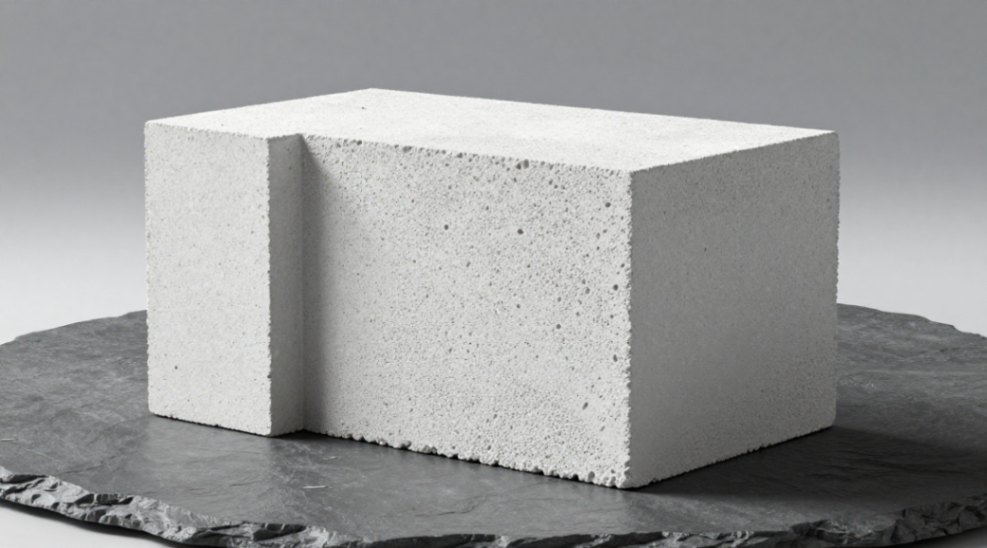
The strong, lightweight alternative. This mix pushes towards the performance of traditional concrete but retains key lightweight benefits.
- The Good Stuff:
- Structural Capability: Compressive strength can reach 15-25 MPa. Suitable for some load-bearing applications when properly engineered.
- Durability: More resistant to impact and weathering. Can be left exposed or receive renders directly.
- Significant Weight Savings: Still 25-40% lighter than standard concrete (2400 kg/m³).
- The Trade-offs:
- Reduced Insulation: Thermal performance drops as density increases.
- Higher Material Cost: Requires more cement and sand per cubic metre.
- Heavier to Handle: While lighter than traditional concrete, blocks are notably heavier than medium-density ones.
- When to Use It:
- Load-bearing lightweight blocks (check local codes).
- Pre-cast non-structural elements like lintels.
- Lightweight topping for composite decks.
- Foundations on weak soils where reducing load is critical.
Cellular Lightweight Concrete vs. The Competition
Let’s see how CLC stacks up within the broader cellular lightweight concrete density range.
- vs. Autoclaved Aerated Concrete (AAC): AAC is a sibling technology, also lightweight and insulating. However, AAC requires high-pressure steam curing (autoclaving) in a factory. CLC can be cast in-situ. CLC offers more flexibility in on-site density adjustment and is often simpler for large volume pours like screeds.
- vs. Traditional Concrete (2400 kg/m³): This is the main event. CLC’s core advantage is its adjustable, lower density.
- CLC drastically cuts dead load. This allows for smaller structural members and foundations.
- CLC provides built-in thermal and acoustic insulation. Traditional concrete does not.
- Traditional concrete has far higher compressive and tensile strength. For heavy structural work, it’s still king.
- vs. Lightweight Aggregate Concrete: This concrete uses expanded clay or shale instead of normal aggregates. It’s heavier than CLC (typically 1400-1900 kg/m³) and offers less insulation for a given weight. Its strength is generally higher, making it better for structural applications where maximum lightness isn’t the top priority.
Making Your Choice: A Simple Decision Framework
Stop overthinking it. Follow this logic.
- Identify Your Primary Need: Is it Maximum Insulation, Lightweight Blocks, or Lightweight Strength?
- Match Density to Need:
- Insulation > Choose Low-Density (400-800 kg/m³).
- Blocks/Infill > Choose Medium-Density (800-1200 kg/m³).
- Strength > Choose High-Density (1200-1800 kg/m³).
- Verify with Testing: Always confirm the cellular lightweight concrete density range and compressive strength with test cubes. The standard wet density test is simple and non-negotiable for quality control.
- Consult Your Mix Designer: A good technician adjusts the foam volume and cementitious mix (cement, sand, fly ash ratios) to hit your exact target density and strength. Don’t guess.
The Final, Critical Step: Partner with a Proven CLC Specialist
Understanding the cellular lightweight concrete density range is powerful. But knowledge alone doesn’t pour a perfect slab. The difference between a successful project and a problematic one lies in consistent foam quality, precise batching, and expert placement. You need a partner who masters this daily.
For over 20 years, my team and I have specialized in one thing: engineering and placing CLC for specific outcomes. We don’t sell a generic product. We deliver a solution based on your required density, strength, and application. If this guide resonated with you, you’re ready for the next step.

Stop researching and start building. Let’s discuss your project’s specific dead load, insulation, and strength requirements. I will provide a mix design recommendation and, if needed, connect you with trusted suppliers and crews in your region. Email me directly at [Your Professional Email] with the subject line “CLC Density Project” to schedule a 15-minute technical consult. Let’s make your lighter, stronger, more efficient build a reality.
Supplier
We are the global leader in lightweight concrete and advanced engineered foam solutions. Known globally for its commitment to research, innovation, and applied expertise, we have been providing engineered foam solutions since the early 2012’s.
We can supply high-quality concrete admixture and foam concrete related products all over the world.
The company has a professional technical department and quality supervision department, a well-equipped laboratory, and equipped with advanced testing equipment and after-sales customer service center.
If you are interested, please feel free and contact us.