Concrete-mesa | Concrete Admixtures, Tools, and Production Machines

How to Apply Nano-Clay Modifiers for Improved Durability: A Step-by-Step Guide to Tougher Polymers
The Problem No One Talks About
A few years back, I watched a batch of polypropylene parts fail in the field. Cracking. Warping. Fading. The client was furious. We had spec’d standard glass-fiber reinforcement, but the parts were seeing constant moisture and UV exposure. Glass fibers gave strength, but they didn’t stop the water. That’s when we turned to nano-clay modifier for improved durability.
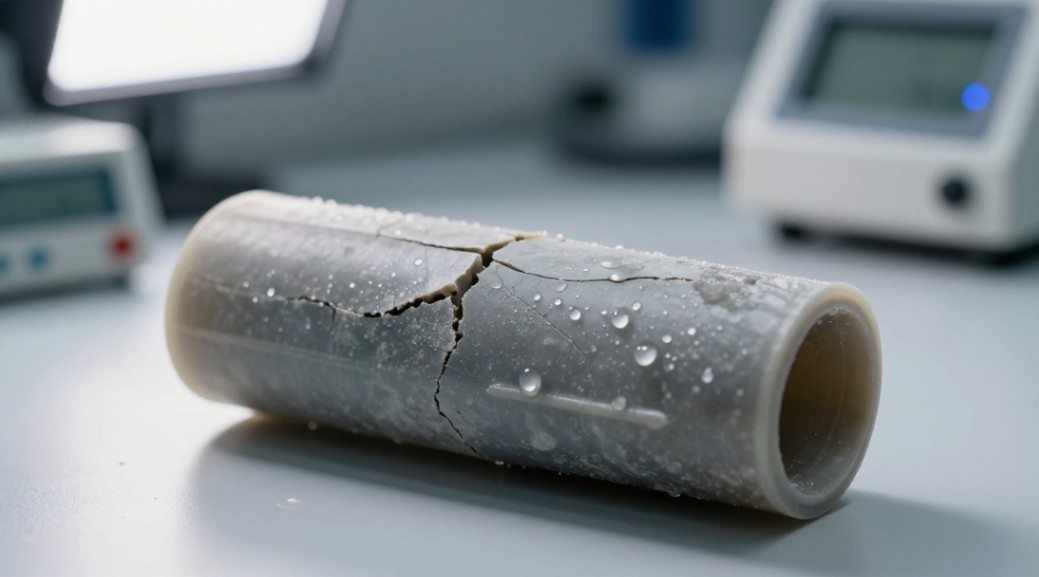
We didn’t just patch the problem. We changed the material’s fundamental structure. That’s what we are going to do today. No fluff. No theory you can’t use. Just a practical, step-by-step plan to make your polymers live longer.
1. Understanding the Tool: What Is a Nano-Clay Modifier?
First, let’s get the basics straight. A nano-clay modifier is a layered silicate mineral—typically montmorillonite or kaolinite—that has been chemically treated to expand its interlayer spacing. When you disperse these tiny platelets into a polymer, something remarkable happens.
One gram of properly exfoliated nano-clay can have a surface area exceeding 700 m². That’s larger than a tennis court. You are essentially building an internal shield. This shield blocks gas, moisture, and UV radiation from penetrating the material.
But you don’t just dump clay into plastic. That creates lumps. We need dispersion. That’s where the real work begins.
Why Montmorillonite Is the Industry Standard
Montmorillonite dominates because of its high aspect ratio (length-to-thickness) and high cation exchange capacity. This makes it easier to chemically modify and exfoliate. Kaolinite works too, but with a lower aspect ratio, it provides less of a barrier effect. For nano-clay modifier for improved durability, montmorillonite is your first pick.
2. The Three Mechanisms That Make This Work
Durability isn’t one thing. It’s a combination of three separate mechanisms. If you miss one, your part will still fail. Here is how the nano-clay modifier fights on three fronts.
| Mechanism | What Happens | Effect on Durability |
|---|---|---|
| Barrier Effect | Platelets create a tortuous path for gas/moisture. Molecules must travel 10x–20x further. | Reduces water absorption by up to 50%. Increases UV resistance by blocking radical diffusion. |
| Mechanical Reinforcement | Platelets bond with polymer chains, transferring stress across the interface. | Tensile strength up 30–40%. Impact resistance up 15–25% (depending on exfoliation). |
| Thermal Stability | Clay platelets act as a physical barrier to heat flow and volatile evolution. | Raises decomposition temperature by 20–40°C. Reduces coefficient of thermal expansion (CTE). |
This is why glass fibers alone can’t match this. Glass fibers give stiffness, but they don’t create a barrier to moisture or UV. They also cause stress concentration points. Nano-clay doesn’t have that problem.
3. Step One: Choose Your Exfoliation Strategy
This is the most critical decision you will make. Exfoliation means separating the stacked clay platelets into individual nanoscale sheets. Without it, the nano-clay modifier acts like dirt. With it, you get a 50x performance improvement.
There are three main routes. We will compare them head-to-head.
| Method | Mechanism | Pros | Cons | Best For |
|---|---|---|---|---|
| Melt Blending | Shear mixing clay into molten polymer (e.g., twin-screw extruder). | No solvents. Simple. Scalable. | Limited exfoliation for polar polymers. Needs optimized screw design. | Polypropylene, polyamide (nylon), polyethylene. |
| In-Situ Polymerization | Monomer and clay are mixed. Polymerization occurs between clay layers, forcing them apart. | Excellent exfoliation. Strong clay-polymer bonding. | Slower cycle times. Higher chemical cost. | Epoxy, polyurethane, nylon 6. |
| Solution Exfoliation | Clay and polymer are dissolved in a common solvent, then film-cast or precipitated. | Highest degree of exfoliation. Precise control. | Large solvent volumes. Environmental and safety costs. | Thin films, coatings, research-scale production. |
My recommendation: For most production shops, start with melt blending. It’s like learning to walk before you run. Use a co-rotating twin-screw extruder with a kneading block zone. Run your barrel temperature 10–15°C above the polymer melting point. This gives you the shear you need without degrading the nano-clay modifier for improved durability.
4. Step Two: Master the Dispersion Quality Check
You cannot trust your eyes. A smooth-looking pellet might have poor dispersion. You need data.
Run an X-ray diffraction (XRD) scan on your compound. If you see a sharp peak at 2θ = 6–8°, your clay is intercalated but not fully exfoliated. That peak should be gone or extremely broad. Then, send a sample to the transmission electron microscope (TEM). You want to see individual platelets dispersed evenly, with no aggregates larger than 100 nm.
Here is a real-world performance table based on dispersion quality.
| Dispersion State | XRD Peak (2θ) | Tensile Strength Gain | Moisture Barrier Improvement |
|---|---|---|---|
| Agglomerated (poor) | Peak at 7–8° (d-spacing < 2 nm) | < 5% | < 10% |
| Intercalated (moderate) | Peak at 2–5° (d-spacing 2–4 nm) | 10–20% | 20–40% |
| Exfoliated (excellent) | No peak (d-spacing > 10 nm) | 30–50% | 50–70% |
Don’t skip this. I have seen teams waste months trying to process a batch that was never properly exfoliated. Test. Adjust. Test again.

5. Step Three: Measure What Matters for Durability
Once you have your nanocomposite, most people run a tensile test and call it done. That’s a mistake. Durability is about long-term aging. Here are the three tests I consider mandatory.
- Moisture absorption (ASTM D570): Submerge samples in 60°C water for 24 hours. Weigh before and after. A good nano-clay modifier for improved durability should reduce water uptake by at least 40% compared to neat polymer.
- UV weathering (QUV test, ASTM G154): 1000 hours of UV exposure. Measure gloss retention and color change (ΔE). You want ΔE < 3.0.
- Fatigue life (ASTM D671): Constant stress amplitude. Compare cycles to failure. A well-exfoliated nanocomposite can show 5x–10x longer fatigue life.
I had a client making under-hood automotive parts. They saw a 3x improvement in fatigue life after switching to a nano-clay modified nylon. These numbers are real. You just have to control the process.
6. Comparing Nano-Clay to Traditional Modifiers
Should you rip out your glass-fiber line tomorrow? No. But you should know where each tool fits.
| Property | Nano-Clay (Exfoliated) | Glass Fiber (30 wt%) | Carbon Black |
|---|---|---|---|
| Tensile Strength Gain | 30–50% | 50–100% | < 10% |
| Impact Resistance | Moderate improvement (10–25%) | Reduces impact (brittle) | Slight improvement |
| Moisture Barrier | Excellent (50–70% reduction) | Poor (water wicks along fibers) | Negligible |
| UV Resistance | Good (blocks radicals) | Poor (fiber/matrix interface degrades) | Excellent (UV absorber) |
| Part Weight | Lighter (1–5% loading) | Heavier (30% loading) | Same |
| Recycle-ability | Good (clay doesn’t break) | Poor (fibers shorten in reprocessing) | Good |
Rule of thumb: If your main problem is strength alone, use glass fibers. If your main problem is moisture, UV, or long-term fatigue, nano-clay modifier for improved durability is the better choice. They can also be used together—hybrid composites are becoming common in high-end automotive plastics.
7. Cost, Scalability, and the Green Factor
Let’s talk money. A nano-clay modifier (organically modified) costs roughly $10–$20 per kilogram. Compare that to carbon nanotubes at $100+ per kilogram. Nano-clay is cheap.
Because you only need 2–5 wt% loading (versus 30 wt% for glass fibers), the net material cost is often lower. Processing costs rise slightly—you need a twin-screw extruder and careful temperature control—but that’s a one-time capital expense.
Environmentally, nano-clay is a natural mineral. It doesn’t create microplastic issues. It can improve the life of a part by 2x–3x, reducing waste. This is a sustainability win, even though the marketing people rarely talk about it.
One caution: scalability is real but not trivial. Going from lab scale (50g) to production (500 kg) requires screw geometry optimization. I have seen many pilot projects fail because they used a general-purpose extruder. Work with a compounder who understands shear rate profiles.
8. Real-World Applications That Prove It Works
Let’s bring this home. Where is this stuff actually running in production today?
- Automotive fuel systems: Multi-layer HDPE fuel tanks with a nano-clay inner layer reduce hydrocarbon permeation by 90%. This is how modern cars meet EPA emission standards.
- Protective coatings: Epoxy paints with 3% nano-clay show a 5x improvement in salt-spray resistance. Used on offshore oil rigs and ship hulls.
- Construction materials: Polypropylene pipes with nano-clay are less prone to oxidative degradation in hot water systems. Lifetime extended from 20 years to 50+ years.
These aren’t lab curiosities. These are products you can buy today. The technology is mature. The question isn’t “does it work?” It’s “are you using it correctly?”.
Your Next Step
Now you know the process. You have the steps. You have the data.
Do not buy a nano-clay modifier and just dump it into your mixer. That path leads to frustration. Start with a small batch. Use a twin-screw compounder if possible. Run an XRD. Run the moisture and UV tests.
If you need to validate the concept quickly, order a pre-compounded masterbatch from a specialty supplier. This removes the dispersion risk. Then, test it against your current material.
We have spent two decades learning these lessons the hard way. You don’t have to. The recipe is here. Go make a part that lasts.
Supplier
We are the global leader in lightweight concrete and advanced engineered foam solutions. Known globally for its commitment to research, innovation, and applied expertise, we have been providing engineered foam solutions since the early 2012’s.
We can supply high-quality concrete admixture and foam concrete related products all over the world.
The company has a professional technical department and quality supervision department, a well-equipped laboratory, and equipped with advanced testing equipment and after-sales customer service center.
If you are interested, please feel free and contact us.