Concrete-mesa | Concrete Admixtures, Tools, and Production Machines

How to Select and Operate a Foam Generator Machine for Concrete Production
Foam Generator Machine for Concrete Production: Core Principles
An effective foam generator machine for concrete production is the critical component that physically determines the final properties of cellular lightweight concrete. This technology mechanically creates a stable, pre-formed foam by mixing a concentrated foaming agent with water and air under pressure. The machine’s primary function is to deliver this foam at a consistent density and flow rate, allowing for precise integration into a cementitious slurry or mortar mix. According to industry analysis from the American Concrete Institute’s committee on lightweight concrete, the stability and consistency of the foam directly correlate to the final hardened concrete’s compressive strength, density, and thermal performance. A machine that fails to produce uniform bubble structure introduces variability that undermines material specifications.
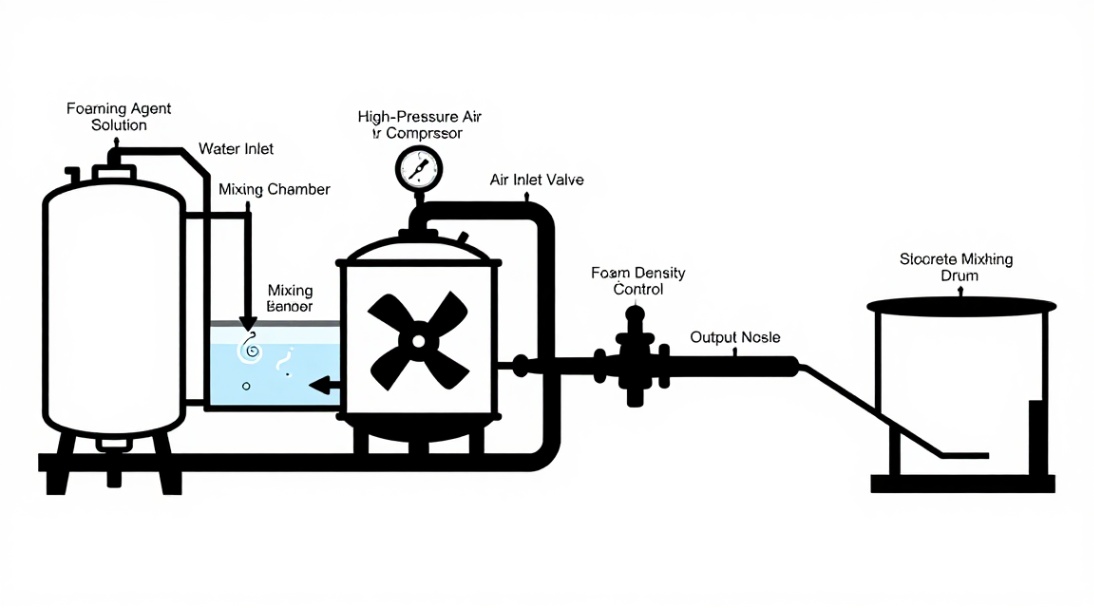
Key Components of a Modern Foam Generator System
Understanding the hardware is essential for operation and troubleshooting. Every professional-grade foam generator machine for concrete production shares these core components.
- Proportioning Pump System: This unit meters the concentrated foaming agent into the water stream. Positive displacement pumps (e.g., diaphragm or piston types) are standard for their accuracy, typically controlled to deliver within ±1% of the set concentration.
- Mixing Chamber/Nozzle: This is where water, foaming agent, and compressed air converge. Advanced designs use a venturi effect or high-shear static mixing elements to ensure complete homogenization and nucleation of micro-bubbles.
- Compressed Air Supply: A dedicated, regulated air line provides the gaseous phase. Consistent air pressure, measured in bar or psi, is non-negotiable for stable foam density.
- Foam Output Line: A reinforced hose or pipe delivers the finished foam to the mixing point. Its diameter and length must be sized to minimize pressure drop and foam degradation.
- Control Panel: This houses the interface for setting foam density (kg/m³ or lb/ft³), flow rate (liters/minute or CFM), and production volume. Modern systems feature PLCs for repeatable recipes and integration with batching plant controls.
Step-by-Step Operation of a Foam Generator Machine
Following a disciplined startup and operation sequence prevents material waste and ensures foam quality. Deviations from this procedure are a primary source of failed batches.
1. Pre-Operational Setup and Calibration
Before introducing any materials, conduct a system cheque. Confirm the foaming agent tank is filled and the suction line is primed. Verify the water supply pressure meets the machine’s minimum requirement, usually between 3 and 6 bar (40-85 psi). Adjust the compressed air regulator to the manufacturer’s specified pressure, often in the 4-7 bar (60-100 psi) range. Connect the foam output hose securely to the designated port on your mixer or inline injection system.
2. Density Calibration and Production Start
Initiate the water flow and start the proportioning pump. The machine will now produce a wet foam. Collect a sample in a pre-weighed, calibrated container of known volume, typically a 1-liter or 1-gallon vessel. Weigh the container with foam. Calculate the wet foam density using the formula: (Weight of Full Container – Weight of Empty Container) / Container Volume. Adjust the air-to-liquid ratio on the control panel until the measured density matches your target, for example, 60 kg/m³. This calibration is not a one-time task. Re-check density every 30-45 minutes of continuous operation or at the start of each new batch.
3. Integration with Concrete Batching
For standard planetary or twin-shaft mixers, introduce the base slurry (cement, water, and any fines like fly ash) first. Begin mixing. Once a homogeneous slurry forms, start the foam generator machine and introduce the foam directly into the mixing vortex. The injection time, usually 2 to 5 minutes, depends on the total batch volume and foam flow rate. Do not add foam to dry materials or after the mix has begun to stiffen. For inline systems, the foam injects into a continuously flowing slurry stream; precise synchronization of flow rates is paramount.
4. Shutdown and Flushing Protocol
After production, run clean water through the foam generator’s liquid lines for a minimum of 5 minutes to purge all residual foaming agent. This prevents crystallization and pump blockages. Some advanced systems feature automated flush cycles. Disconnect and drain the foam output hose. Record operational parameters and any deviations in the logbook for future reference and maintenance scheduling.
Critical Features: Selecting the Right Machine
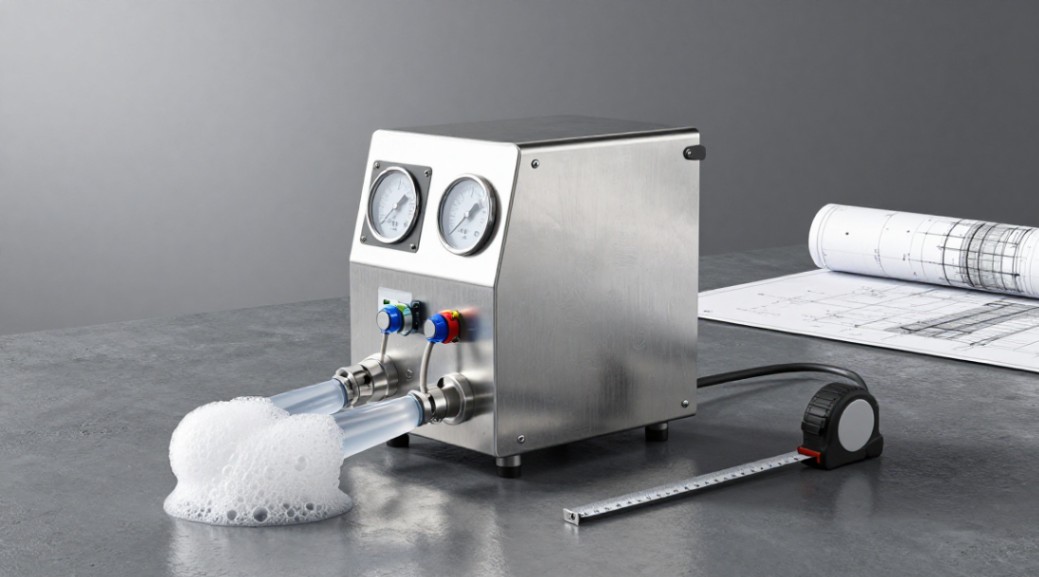
Choosing a foam generator machine for concrete production involves matching technical specifications to project demands. The table below compares key decision factors.
| Feature | Standard Unit | High-Capacity/Integrated Unit | Impact on Production |
|---|---|---|---|
| Output Capacity | Up to 500 L/min | 500 – 2000+ L/min | Determines batch cycle time and suitability for large pours or continuous production. |
| Foam Density Control | Manual valve adjustment | Digital PID controller with feedback loop | Digital control ensures tighter density tolerances (±5 kg/m³), crucial for structural grade foam concrete. |
| Automation & Integration | Standalone operation | PLC with HMI, remote I/O for plant control | Enables seamless recipe management, data logging, and synchronization with automated batching plants. |
| Construction & Materials | Standard industrial components | Corrosion-resistant pumps, stainless steel fluid paths | Enhances durability with harsh admixtures, reduces maintenance frequency in high-usage environments. |
Maintenance and Troubleshooting Protocols
Consistent performance requires disciplined maintenance. Follow the manufacturer’s schedule, but focus on these critical points.
Preventive Maintenance
Daily: Inspect all hoses and fittings for leaks. Weekly: Check pump seals and diaphragm condition. Verify calibration accuracy. Monthly: Clean filters on water and air lines. Inspect the mixing nozzle for wear or blockages. Annually: Service pumps and calibrate all sensors. A worn nozzle directly causes inconsistent bubble size and foam collapse.
Troubleshooting Common Issues
Foam is too wet or drains quickly: This indicates low air pressure or a high water-to-agent ratio. First, verify and increase air supply pressure. Second, check for proper foaming agent concentration; the pump may be under-dosing.
Inconsistent foam density during a pour: Fluctuations point to an unstable air or water supply pressure. Install a pressure regulator with a gauge on the compressor line. Ensure the water supply is not being shared with other equipment during foam generation.
No foam output, only liquid: The most common cause is a blocked air inlet or failed compressor. Check the air solenoid valve and line. Second, confirm the proportioning pump is actually running and the agent tank is not empty.
Safety and Operational Best Practices
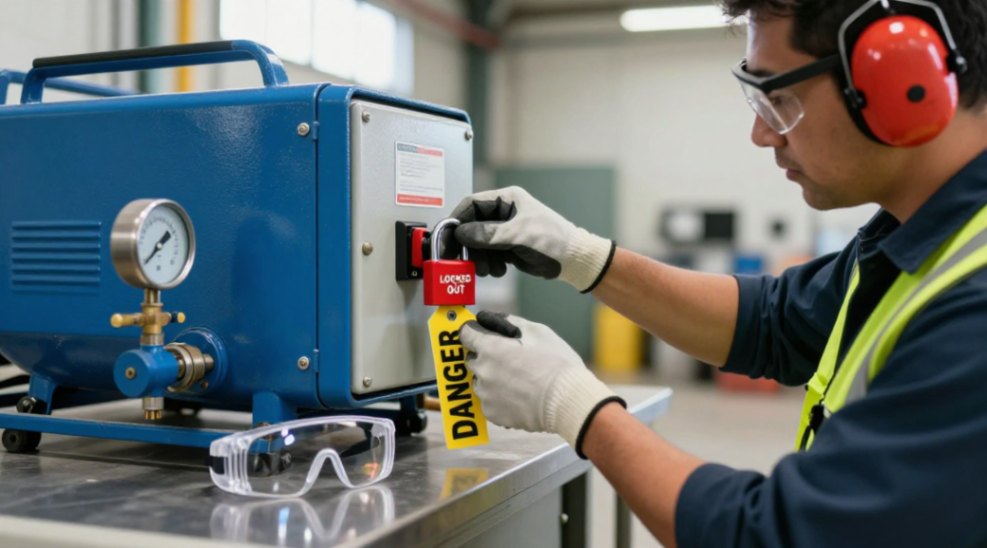
High-pressure air and electrical systems demand respect. Always lock out/tag out the machine before performing any internal maintenance. Wear appropriate PPE-safety glasses are mandatory as foaming agent can cause severe eye irritation. Ensure the machine is electrically grounded. Never bypass safety guards or pressure relief valves. The working area should be well-ventilated to prevent the accumulation of aerosolized agents.
Conclusion and Path Forward
Mastering the foam generator machine for concrete production transforms it from a simple tool into a precision instrument for material engineering. The steps outlined-rigorous calibration, systematic integration, and proactive maintenance-form the foundation of reliable foamed concrete production. Your next step is application-specific. For infrequent, low-volume projects, a calibrated standalone unit may suffice. For large-scale commercial production, an integrated system with automated controls becomes a necessity to guarantee consistency and efficiency. Evaluate your daily output targets, density requirements, and labour resources. Then, source a machine whose specifications not only meet but exceed those demands, ensuring longevity and return on investment.
Supplier
We are the global leader in lightweight concrete and advanced engineered foam solutions. Known globally for its commitment to research, innovation, and applied expertise, we have been providing engineered foam solutions since the early 2012’s.
We can supply high-quality concrete admixture and foam concrete related products all over the world.
The company has a professional technical department and quality supervision department, a well-equipped laboratory, and equipped with advanced testing equipment and after-sales customer service center.
If you are interested, please feel free and contact us.