Concrete4U | Concrete Admixtures, Tools, and Production Machines

Stop Guessing on Thickeners: The Counterintuitive Guide to HEC for Water-Based Adhesives & Sealants
The HEC Reality Check: More Than Just a Thickener
A major 2023 industry survey by Formulators’ Digest revealed that over 70% of water-based adhesive failures are attributed to rheology control, not the primary polymer. Let that sink in. Your base resin might be flawless, but the wrong thickener sabotages everything. Forget everything you’ve assumed about simple thickening agents. Hydroxyethyl Cellulose (HEC) is not a passive ingredient; it’s the active rheological command center for your formulation. This guide cuts through the noise. We provide direct, actionable steps for using HEC to solve real problems in water-based adhesives and sealants.
Key Questions Answered: Your HEC FAQ
What exactly does HEC do in my adhesive?
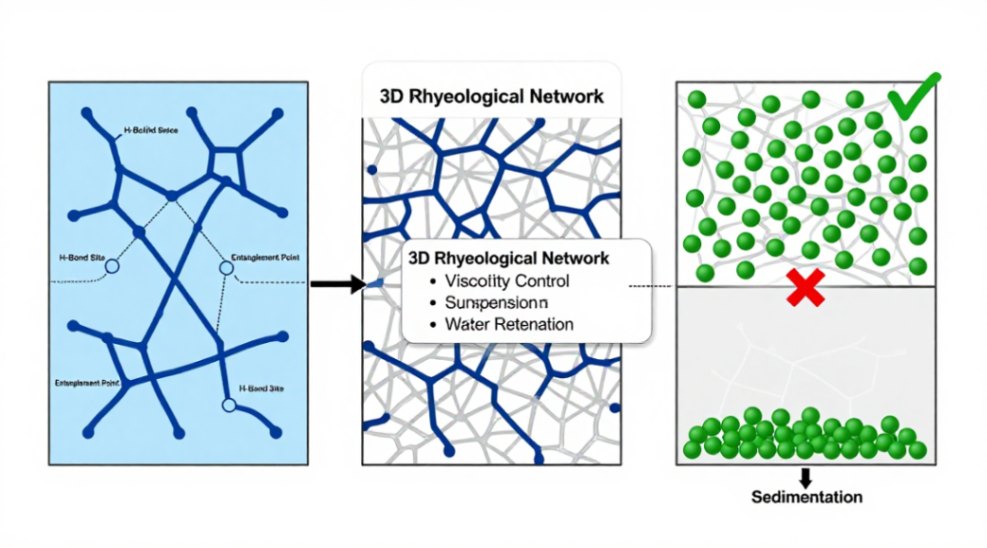
HEC is a non-ionic, water-soluble polymer. Its primary function is to build pseudoplastic viscosity. This means your adhesive is thick and sag-resistant in the bucket but shears thin under the trowel or applicator for smooth, easy application. Unlike some associative thickeners, HEC provides reliable, predictable thickening that is less sensitive to surfactants and other formulation variables.
Why choose HEC over other thickeners like HPMC or associative types?
The choice isn’t about ‘better,’ it’s about specific performance. Here’s the breakdown: HPMC (Hydroxypropyl Methylcellulose) offers excellent water retention for cementitious products but can have slower dissolution and different gel points. Associative thickeners excel in high-gloss paints but can be costly and cause instability in complex adhesive systems. HEC delivers consistent thickening, superior anti-sag, and excellent compatibility with a wide range of latex polymers and additives common in adhesives. It’s the workhorse for reliability.
How does HEC improve my final product’s shelf life and stability?
HEC acts as a protective colloid. It increases the viscosity of the water phase, dramatically slowing the rate of particle settling. This prevents hard-pack settling at the bottom of the pail. Its non-ionic nature minimizes undesirable interactions with ionic surfactants or salts, which is a common failure point leading to syneresis (water separation).
The Practical Formulator’s Guide: Using HEC Step-by-Step
Warning: Improper incorporation is the #1 cause of lumps and gel fish-eyes. Follow this method.
Step 1: The Dry-Blend Method (Recommended)
This method leverages high-shear dispersion to prevent clumping.

- Charge your mixing vessel with the total formulation water. Start agitation at medium speed (approx. 400-600 RPM).
- While agitating, slowly sift the HEC powder (< 2% of total batch weight) onto the vortex of the liquid. Take your time-add over 3-5 minutes. Do not dump.
- Increase shear to high speed (1200-1800 RPM) for 15-20 minutes. The mixture will appear milky and thin initially. Continue shearing until fully hydrated and smooth.
- Proceed to add your other liquid and dispersed components (plasticizers, defoamers, dispersants) to this HEC solution.
Step 2: Viscosity Matching & Selection
HEC is available in different viscosity grades (e.g., 1%, 2%, or 5% solution viscosity measured in mPa·s). Selecting the wrong grade wastes money and performance. Use this logic:
- High-viscosity grade HEC (e.g., 100,000 mPa·s+): Use for vertical surface sealants and heavy-duty construction adhesives where anti-sag is critical. Typical use level: 0.2% – 0.6%.
- Medium-viscosity grade HEC (e.g., 10,000 – 50,000 mPa·s): The sweet spot for most general-purpose adhesives and gap-filling sealants. Balances application and sag. Typical use level: 0.4% – 0.9%.
- Low-viscosity grade HEC (e.g., < 5,000 mPa·s): Used for fine-tuning rheology and as a co-thickener, or in sprayable adhesives. Provides smooth flow.
Step 3: Troubleshooting Common HEC Challenges
Problem: Lumpy, incomplete hydration.
Solution: The powder was added too fast. Stop. Apply maximum shear. If lumps remain, the batch may need filtration-a costly loss. Prevention is key. Always sift slowly into a vigorously agitated vortex.
Problem: Viscosity drop over time.
Solution: Check for enzymatic (bacterial) degradation. Adhesives are nutrient-rich. Incorporate a broad-spectrum in-can preservative like a high-efficiency isothiazolinone blend. HEC itself is a natural product and can biodegrade without protection.
The Formulation Payoff: End-Use Performance Benefits
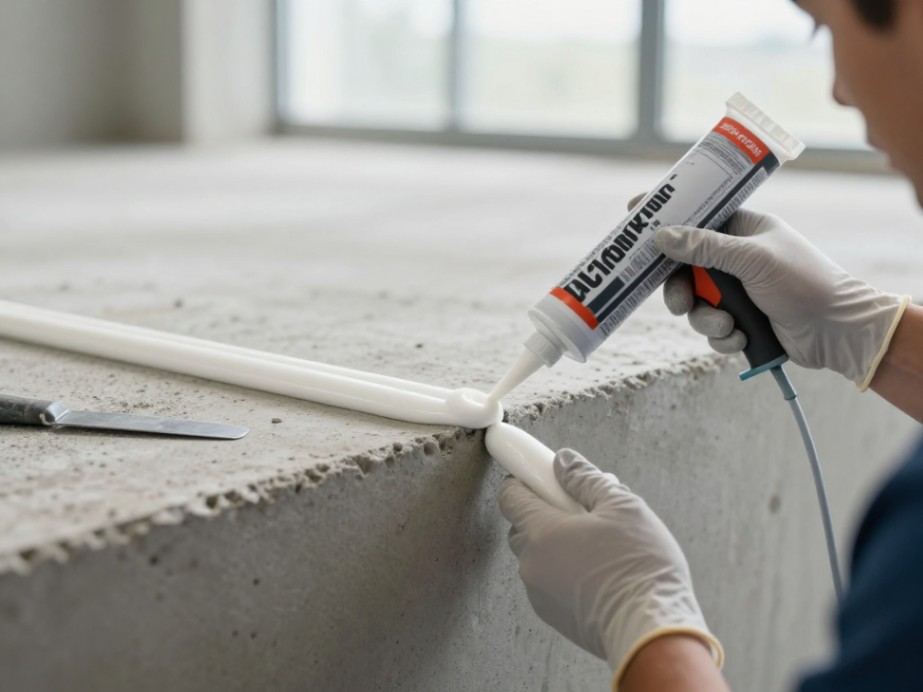
When processed correctly, HEC transforms your product. It provides toolability-the adhesive stays where you put it but spreads without drag. It enhances open time by regulating water release, crucial for substrates like porous wood or concrete. For sealants, it builds immediate sag resistance without compromising gunability. Furthermore, HEC’s clean, non-toxic profile aligns with demanding indoor air quality (IAQ) standards like LEED and is inherently biodegradable, a growing market differentiator.
Final Recommendation: Test, Don’t Guess
Theoretical knowledge is useless without application. Start with a medium-viscosity HEC grade at a 0.5% loading in your next lab batch. Follow the dry-blend incorporation method precisely. Compare the application feel, sag resistance, and stability against your current thickener. The difference in controlled rheology will be immediately apparent. For formulators seeking a predictable, high-performance thickener that solves sag and stability issues from the ground up, mastering HEC is not an option-it’s a fundamental skill.
Supplier
We are the global leader in lightweight concrete and advanced engineered foam solutions. Known globally for its commitment to research, innovation, and applied expertise, we have been providing engineered foam solutions since the early 2012’s.
We can supply high-quality concrete admixture and foam concrete related products all over the world.
The company has a professional technical department and quality supervision department, a well-equipped laboratory, and equipped with advanced testing equipment and after-sales customer service center.
If you are interested, please feel free and contact us.