Concrete4U | Concrete Admixtures, Tools, and Production Machines

How Advanced Admixtures Are Revolutionizing Fiber-Reinforced Concrete for Modern Siding Applications
1. Introduction
When you think of concrete, images of gray slabs and industrial structures might come to mind—but not anymore. Today, concrete is stepping into the spotlight as a stylish, sustainable, and durable material for residential exteriors, especially in the form of fiber-reinforced concrete siding. What makes this transformation possible? The secret lies in advanced concrete admixtures. These chemical additives fine-tune everything from flowability to freeze-thaw resistance, enabling manufacturers to produce sleek, wood-look panels that last decades with minimal maintenance.
2. Why Fiber-Reinforced Concrete Siding Needs Specialized Admixtures
Fiber-reinforced concrete (FRC) combines cement, aggregates, water, and reinforcement fibers—like polypropylene, steel, or even coconut fiber—to create a composite material that’s stronger, more flexible, and less prone to cracking than traditional concrete. But incorporating fibers changes the mix dynamics dramatically. That’s where admixtures come in.
Without the right admixture types, FRC mixes can become too stiff, hard to cast, or uneven in texture—especially when producing thin, large-format siding panels. This is why choosing the best admixture for concrete in this context isn’t just helpful—it’s essential.
2.1. Superplasticizers: Enabling Flow Without Compromise
One of the most critical admixtures in modern FRC siding production is the superplasticizer. Also known as high-range water reducers, superplasticizers like polycarboxylate ether (PCE)-based formulations drastically improve workability without adding extra water. This is crucial because excess water weakens concrete and increases shrinkage—bad news for thin siding panels.
Superplasticizer in concrete allows manufacturers to achieve a smooth, homogeneous mix that flows easily into molds, capturing fine wood-grain textures without voids. Whether it’s called a plasticizer for concrete, concrete plasticiser, or superplasticizer admixture, this chemical admixture for concrete ensures consistent surface quality across thousands of panels.
2.2. Waterproofing Admixtures: Protecting Against the Elements
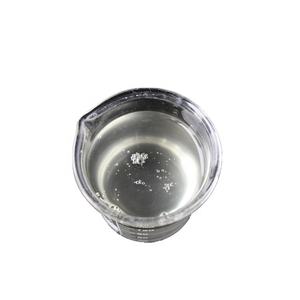
Exterior siding faces constant exposure to rain, humidity, and temperature swings. To combat moisture intrusion, producers integrate waterproofing admixtures directly into the mix. Options include integral waterproofer systems and crystalline waterproofing admixture technologies that react with cement to form insoluble crystals, blocking capillary pores.
These concrete waterproofing additives—sometimes labeled as cement waterproofing additive or waterproof admix—eliminate the need for external sealants, reducing long-term maintenance. For homeowners seeking durable concrete siding that looks like wood but won’t rot or warp, this built-in protection is a game-changer.
2.3. Accelerators and Retarders: Precision Control Over Curing
Production speed matters in precast facilities. Fast curing concrete additives, such as concrete accelerator formulations, shorten demolding time without compromising strength. This boosts output and reduces energy costs.
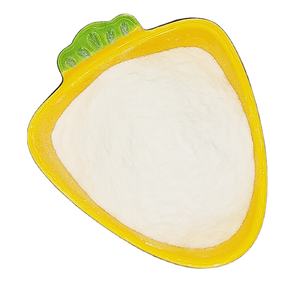
Conversely, in hot climates or complex casting scenarios, a concrete retarder admixture may be used to delay setting. Surface retarder concrete techniques can even create exposed-aggregate finishes for decorative effects. The balance between accelerating admixtures for concrete and admixture retarder systems gives manufacturers unmatched control over the final product.
2.4. Air Entraining and Fiber Compatibility
Air entraining admixture is another key player, especially in regions with freeze-thaw cycles. By introducing microscopic air bubbles, air entraining concrete improves durability by giving water room to expand when it freezes. When combined with fibers—whether polypropylene fibres for concrete or steel fibers for concrete—the result is a synergistic boost in crack resistance and impact strength.
Modern formulations ensure that air entraining agents don’t interfere with fiber dispersion. This compatibility is vital for achieving uniform performance in products like Hardie concrete siding or CertainTeed concrete siding available at retailers like Home Depot.
3. Real-World Impact: From Factory to Facade
Thanks to these advanced concrete chemicals, today’s fibercement siding offers realistic wood aesthetics—think charcoal stamped concrete textures or terra cotta concrete color finishes—without the upkeep. Panels are lighter, easier to install, and resistant to fire, insects, and moisture.
Manufacturers also leverage colored concrete powders and release agents during molding to add visual depth. Combined with the structural benefits of fiber reinforcement, this creates a product that’s as beautiful as it is resilient.
4. Conclusion
The evolution of concrete siding—from utilitarian panels to premium architectural cladding—is powered by innovation in admixture technology. Superplasticizers, waterproofing admixtures, accelerators, and air-entraining agents all play specialized roles in optimizing fiber-reinforced concrete for real-world performance. As demand grows for sustainable, low-maintenance exteriors, these concrete additives will continue to shape the future of building design—one wood-look panel at a time.
Our Website founded on October 17, 2012, is a high-tech enterprise committed to the research and development, production, processing, sales and technical services of ceramic relative materials such as How. Our products includes but not limited to Boron Carbide Ceramic Products, Boron Nitride Ceramic Products, Silicon Carbide Ceramic Products, Silicon Nitride Ceramic Products, Zirconium Dioxide Ceramic Products, etc. If you are interested, please feel free to contact us.