Concrete-mesa | Concrete Admixtures, Tools, and Production Machines

A Practical Guide to Installing Structural Synthetic Fibers in Industrial Concrete Floors
Structural Synthetic Fiber for Industrial Floors Defined
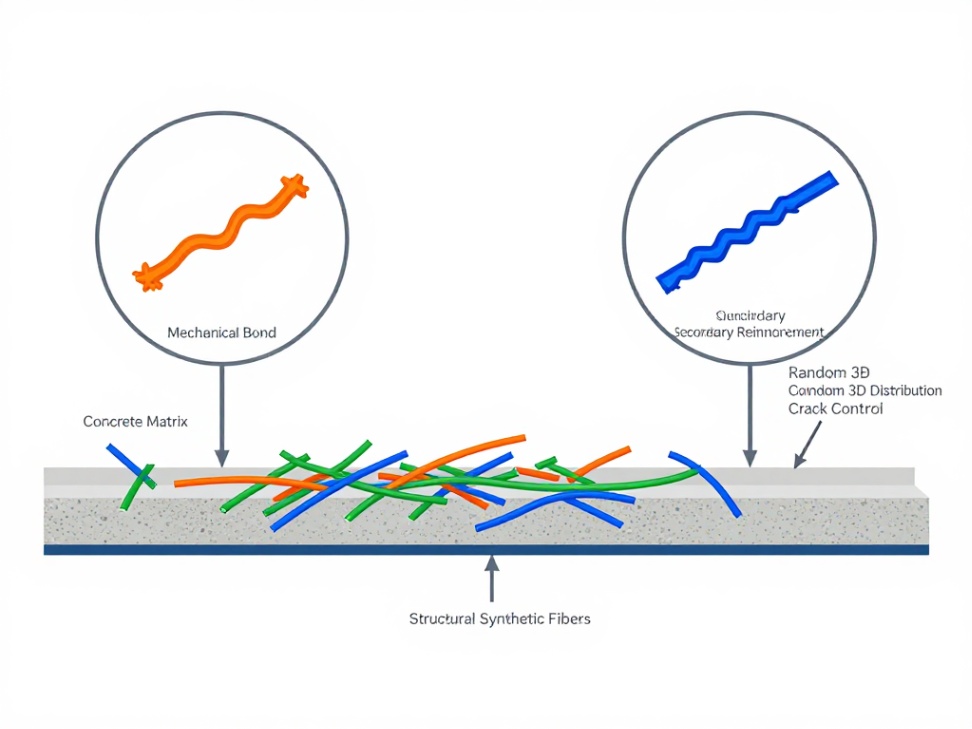
Structural synthetic fiber for industrial floors is a high-performance, discrete reinforcement designed to control cracks and provide secondary reinforcement in concrete slabs. Unlike traditional steel mesh, these fibers consist of engineered polymers like polypropylene, polyolefin, or polyester, manufactured into specific shapes and lengths to mechanically bond with the concrete matrix.
Core Functions and Performance
The primary function is post-crack performance. Once micro-cracks form, the fibers bridge the gap, transferring stress and preventing crack propagation. This directly improves impact and abrasion resistance. A 2022 report by the American Concrete Institute notes that properly dosed macro-synthetic fibers can replace welded wire mesh in many slab-on-grade applications, providing more consistent, three-dimensional reinforcement.
Step-by-Step Guide: How to Specify and Install Structural Fibers
Step 1: Selection and Specification
First, select the correct fiber type and dosage. For standard industrial floors, macro-synthetic fibers (typically 40-55mm in length) are common. Key metrics are tensile strength and modulus of elasticity. Higher modulus fibers offer greater stiffness for crack control. Consult the manufacturer’s data sheets. Specify the dosage in kilograms per cubic metre of concrete. A typical range for structural performance is 3 to 9 kg/m³.
Step 2: Mix Design Integration
Integrate the fiber specification into your concrete mix design. Fibers are compatible with most admixtures, but you must account for the slight increase in water demand. Inform your ready-mix supplier. The order of batching is critical: add fibers to the mixer after the aggregates and a portion of the mixing water, but before final water adjustment. This ensures optimal dispersion.
Step 3: On-Site Quality Control During Batching
Monitor the batching process. Visually inspect several truck loads for fiber balling or uneven distribution. Reject loads with visible fiber clumps. The concrete should appear homogeneous. A slump test is still valid, though fibers may reduce slump by 25-50mm compared to plain concrete.
Step 4: Placement and Finishing
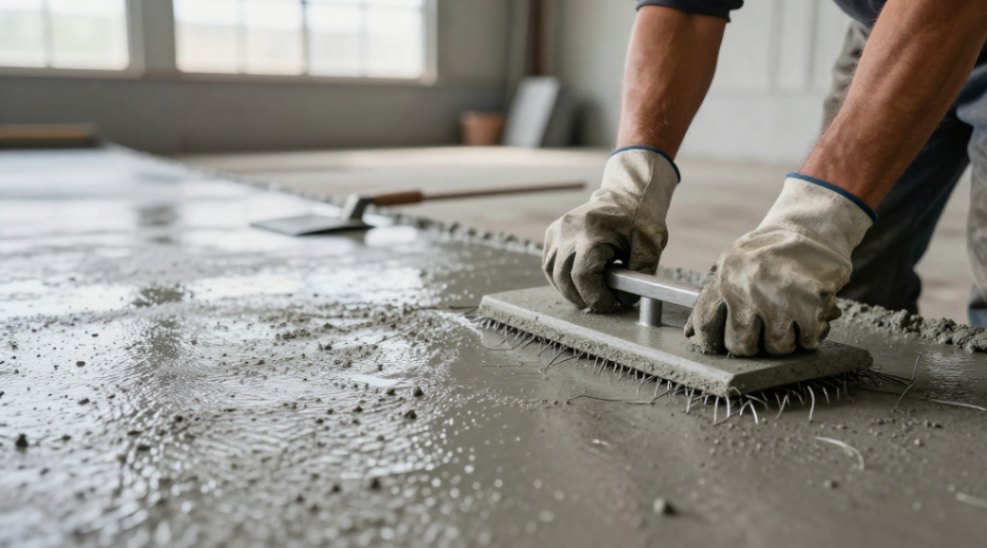
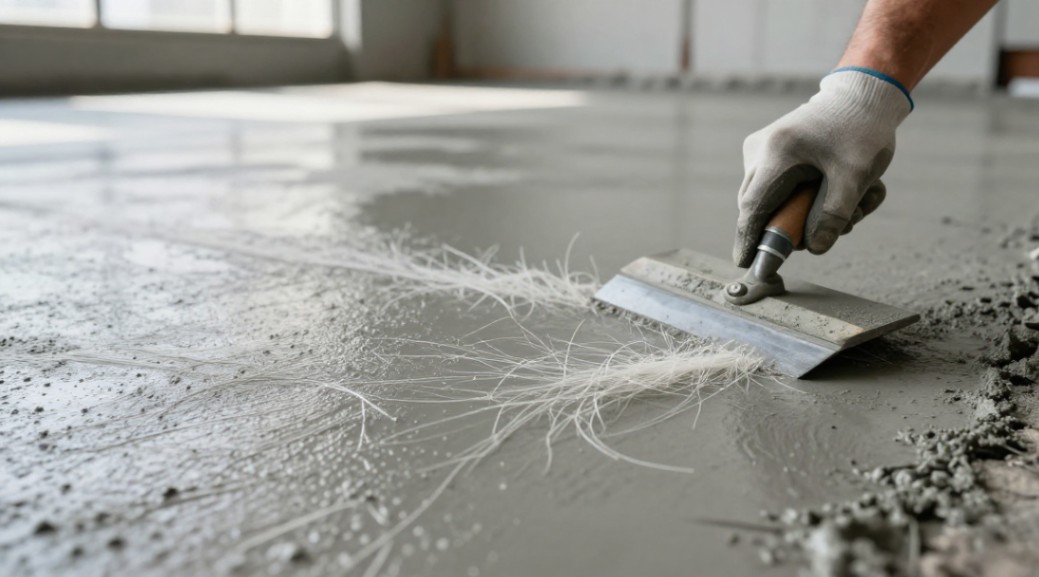
Place and vibrate concrete normally. The fibers do not inhibit consolidation. During finishing, timing is key. Wait until the bleed water has evaporated. Fibers near the surface may be exposed if finishing begins too early. Use a magnesium float for the initial pass. A slight crust may form; a second pass with a steel trowel will embed any exposed fibers and achieve the desired surface hardness.
Advantages Over Traditional Steel Reinforcement
Structural synthetic fibers offer distinct lifecycle benefits. They eliminate the labor and time cost of placing steel mesh. This accelerates construction schedules. The three-dimensional reinforcement provides superior crack control in both plane and depth, allowing for increased joint spacing. Perhaps the most significant long-term advantage is corrosion immunity. In environments with moisture or chemicals, steel rusts and can cause spalling. Synthetic fibers are inert.
Application-Specific Benefits
In warehouses, fibers reduce joint maintenance from forklift traffic. For manufacturing plants, they enhance impact resistance from dropped tools or materials. In cold storage facilities, their non-corrosive nature is critical in sub-freezing, high-moisture conditions where steel would rapidly deteriorate. A well-known expert in industrial flooring, Dr. James Peterson, states, ‘The shift to structural synthetic fibers is driven by total cost of ownership. The initial premium is offset by reduced construction time and vastly lower long-term maintenance.’
Making the Final Decision
The choice is clear for most modern industrial floors. If your priority is a durable, low-maintenance floor with faster installation, structural synthetic fiber for industrial floors is the superior solution. For heavy dynamic loads or specific structural requirements, a hybrid design combining fibers with minimal rebar may be optimal. Conduct a lifecycle cost analysis. Factor in mesh installation labor, potential corrosion repairs, and joint maintenance.
To implement this solution correctly, you need the right product and precise specifications. We strongly recommend consulting with our technical team. We provide project-specific mix designs, on-site support, and high-performance structural synthetic fibers proven in countless facilities. Contact us today for a specification review and a sample batch analysis. Ensure your next industrial floor is built for longevity and performance from the ground up.
Supplier
We are the global leader in lightweight concrete and advanced engineered foam solutions. Known globally for its commitment to research, innovation, and applied expertise, we have been providing engineered foam solutions since the early 2012’s.
We can supply high-quality concrete admixture and foam concrete related products all over the world.
The company has a professional technical department and quality supervision department, a well-equipped laboratory, and equipped with advanced testing equipment and after-sales customer service center.
If you are interested, please feel free and contact us.